
Reviewed · GJIROKASTER TOURS
Prepare Osa with Teta Marjeta
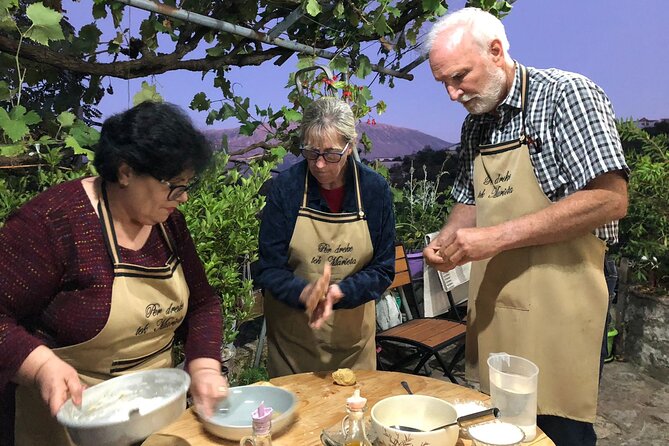
Gjirokaster’s best cooking lesson may be the one that takes you into Teta Marjeta’s home, where you prepare three local dishes rather than simply watching someone cook. You’ll work on Osa, a chicken-and-pasta dish, Qifqi rice fritters, and Hasude, a traditional dessert, then sit down to eat what you made.
I like the small maximum group of 10, which gives the class a more personal feel, and I like the practical recipe cards. The raki made by Marjeta’s husband, seasonal salad, and drinks add a warm family touch. The main consideration is that the class lasts about two and a half hours, so it takes a good part of an afternoon.
Key points to know before booking
- Three Gjirokaster specialties: Prepare Osa, Qifqi, and Hasude from scratch.
- A home-based setting: The class takes place at Marjeta’s house, with cooking and dining on a veranda.
- Small group size: No more than 10 people can join.
- Drinks included: Expect raki, wine, soft drinks, and other homemade drinks.
- Recipes to take home: You receive instructions for recreating the dishes after your trip.
- Simple meeting point: Meet at Sheshi Çerçiz Topulli 5, then walk with the host to the house.
Why this cooking class feels different in Gjirokaster
A cooking class can easily turn into a demonstration where you watch someone else do the work. This one is designed differently. You enter a local home, handle the ingredients, help prepare the meal, and eat at the same table afterward.
That change matters. Food becomes a way to understand Gjirokaster through everyday habits rather than through a lecture. You learn what makes Qifqi a local specialty, how Osa combines pasta and chicken, and how a simple dessert such as Hasude fits into a home-cooked meal.
The setting also gives the class a more personal rhythm. Marjeta opens her home to the group, and the session begins with a drink and conversation. You might choose raki produced by her husband, a soft drink, or one of the homemade drinks she prepares.
The class is offered in English, with a local guide leading the activity. Besi is mentioned as a translator who helps make the cooking and conversation accessible. That is useful if you want to ask questions while working instead of trying to follow a fast kitchen demonstration.
A few more Gjirokaster days to weigh up
- Gjirokastra- The Stone City & Blue Eye- The monument of Nature.
★ 4.5 · 180 reviews - Gjirokastra UNESCO & Ksamil Beach – From Tirana/Durres/Golem
★ 5.0 · 117 reviews - 1-Day Tour in Blue Eye, Monastery, Gjirokaster and Lekursi Castle
★ 5.0 · 76 reviews
Meeting at Cerciz Topulli Square
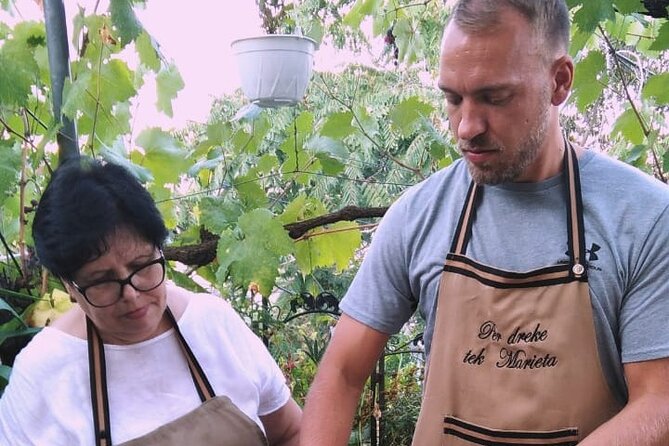
You start at Sheshi Çerçiz Topulli 5 in Gjirokaster. This is not a hotel pickup, so plan to reach the square on your own and arrive ready to walk with the host to Marjeta’s home.
The walk is part of the transition from sightseeing to the class. You leave the public meeting place and enter a more domestic setting. The exact walking time is not provided, so allow a little breathing room before the stated start time rather than arriving at the last minute.
The meeting point also makes the activity easy to pair with time in central Gjirokaster. You can arrange the class around your sightseeing day without needing a separate transfer. At the end, you return to the same meeting point.
The activity lasts about two hours and 30 minutes. That is long enough to prepare several dishes and eat together, but it is not a full-day food tour. You will need to give up a substantial afternoon or another block of your day.
A drink, a chat, and the start of the meal
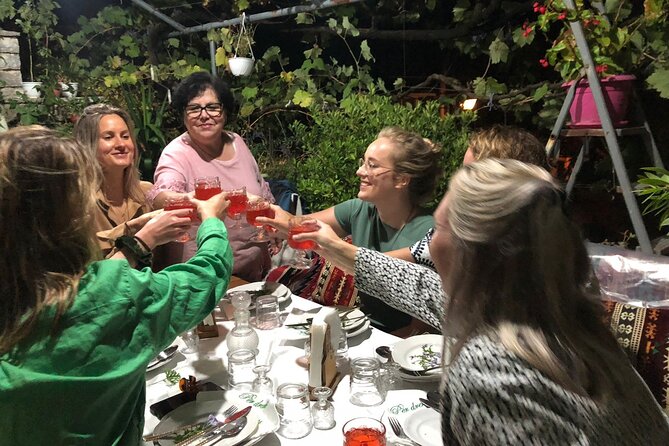
The first part of the class is relaxed. You settle in with a glass of raki, a soft drink, or another beverage while talking with the group.
The raki has a local family connection: it is produced by Marjeta’s husband. That detail gives the drink more meaning than a standard bar pour, although the minimum drinking age is 18. You do not need to drink alcohol because soft drinks are available.
The drinks are included in the price, as is the food. This makes the cost easier to judge because you are not starting with a class fee and then adding charges for the meal, wine, or raki.
The group size can reach 10 people. That is small enough for a shared table and hands-on cooking, though the mood will depend on the mix of people in your session. If you prefer private instruction, this is not advertised as a private class.
Making Qifqi, Gjirokaster’s rice specialty
Qifqi is the starter and one of the most distinctive parts of the menu. It is associated with Gjirokaster and is made mainly with rice.
The appeal here is local specificity. You are not preparing a generic Mediterranean appetizer that could appear anywhere in the region. Qifqi gives you a dish tied directly to the city, and the class lets you learn how it is prepared before tasting it at the table.
Because the dish is prepared as part of a three-course meal, you also see how it fits into a larger menu. It begins the meal, followed by Osa, rather than arriving as an isolated sample.
The supplied details do not explain the exact cooking method, ingredients beyond rice, or how much hands-on time each person gets. You should expect practical participation, but not assume that every guest prepares a separate full batch from start to finish.
A completely different kind of day from the same base:
- Gjirokastra, Blue Eye, Ksamil & Saranda – Day Tour from Tirana
★ 4.5 · 47 reviews - Blue Eye, Gjirokaster & Lekures | Private & Small Group Tours
★ 5.0 · 44 reviews - Tour Gjirokaster,Blue Eye & Lekursi Castle
★ 4.5 · 39 reviews - Gjirokastra & Bylis Illyrian City Day tour Tirana/Durres/Golem
★ 5.0 · 36 reviews
Preparing Osa, the main course
Osa is the main dish and is described as a kind of pasta combined with chicken. It is one of the special recipes associated with Marjeta’s cooking.
This is likely the most substantial part of the class. You work with a dish that shows how local home cooking can combine familiar ingredients in a way that feels specific to Gjirokaster. The recipe also has a useful advantage for home cooks: pasta and chicken are easier to find after you return home than many rare regional products.
The meal is made with fresh, local ingredients. That does not mean every ingredient is identified in advance, so anyone with allergies or strict dietary needs should ask before booking. The available information does not promise vegetarian, vegan, gluten-free, or other adapted versions.
After the preparation, Osa becomes the center of the shared meal. You are not eating a pre-plated restaurant version while someone else clears the kitchen. The point is to taste the result of the work you have just done.
Finishing with Hasude and seasonal salad
Hasude is the dessert. It completes a menu that begins with Qifqi and moves through Osa as the main course.
The dessert gives the class a useful balance. You are not spending all your time on savory cooking, and you leave with three recipes rather than one. The class also includes a seasonal salad that Marjeta has already prepared for you.
That salad is a small but sensible touch. It adds freshness to the meal without taking time away from the dishes you are there to learn. It also means the meal is more complete than the sample menu alone might suggest.
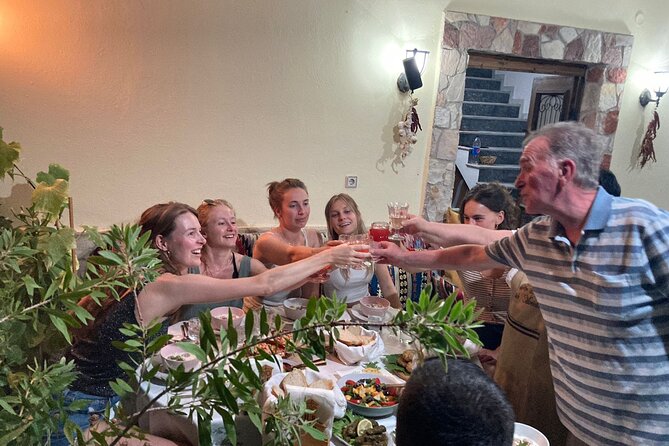
The food is served after the hard work is done. You sit with the guide, Marjeta, and the rest of the group, then pair the meal with a complimentary glass of wine, raki, or a soft drink.
The veranda and the social side of the class
The cooking takes place on a cute veranda, according to the available experience details. A veranda changes the tone of the lesson. It gives you an open, home-like place to cook and eat instead of placing you in a formal training kitchen.
The social side is important here. You are expected to chat while you cook and eat, so this suits people who enjoy shared activities. It may be less appealing if you want a quiet, tightly timed class focused only on technique.
Marjeta, the guide, and the support team are described as friendly and welcoming. Besi is specifically noted as a translator. That help can matter when cooking instructions, local food terms, or casual conversation move quickly.
Still, keep your expectations realistic. This is a cultural meal and a cooking lesson, not a professional culinary course. You will learn recipes and take part in preparation, but the experience does not promise advanced knife skills, a formal certificate, or a long lesson about Albanian foodways.
What the $66.09 price includes
At $66.09 per person, the price is reasonable if you value food, drinks, instruction, and a home setting in one package. You are paying for about two and a half hours, three prepared dishes, a seasonal salad, beverages, and the chance to eat the finished meal.
The value is strongest for people who would otherwise pay separately for lunch and a short activity. Here, the meal is part of the lesson, and you receive recipe cards to use at home. That last part makes the experience useful beyond your time in Gjirokaster.
The price is less compelling if you are mainly looking for a cheap meal. A cooking class asks you to spend time preparing the food, and you may prefer a restaurant if you want to sit down immediately.
The drinks help keep the total cost clear. Afternoon tea and beverages are included, along with the food. You will not need to budget separately for the listed raki, wine, or soft drink, although the details do not specify every beverage choice available at a given session.
The experience has a 4.7 rating from seven published ratings. That is a strong result, though the number of ratings is small. The clearest strengths are the friendly welcome, the veranda setting, the local dishes, and the fact that the recipes can be cooked again at home.
Who will get the most from this activity
I would choose this class if you want an activity that connects directly with local home life. It suits couples, families with older children, solo visitors who enjoy meeting people, and small groups looking for something beyond monuments and viewpoints.
It is also a good choice for food-minded visitors who want dishes that are specific to Gjirokaster. Qifqi is especially useful in that respect because it is presented as a specialty found only in the city.
The class works well for English-speaking participants. English is the offered language, and a translator named Besi may assist. You should still ask ahead about food allergies, intolerances, or dietary restrictions because no special menu is promised.
People under 18 can participate only with care around the drink service, since the minimum drinking age is 18. Alcohol is not required, with soft drinks available.
You may want a different activity if you dislike group dining, do not want to cook on holiday, or need a fully private lesson. The maximum group is 10, which is modest, but it is not the same as one-on-one instruction.
Planning the timing and cancellation
This class is often booked about 37 days ahead. That suggests you should reserve early if your Gjirokaster dates are fixed, especially if you want a particular afternoon.
You receive confirmation when booking, and the ticket is mobile, so you do not need to print a voucher. The activity starts and ends at the listed meeting point, with the group walking to Marjeta’s home during the session.
Free cancellation is available until 24 hours before the start time. If you cancel later, the amount paid is not refunded, and changes made inside that 24-hour window are not accepted. The cut-off follows local Gjirokaster time, so check the clock carefully if you are arranging plans from another time zone.
Should you book Prepare Osa with Teta Marjeta?
Book it if you want hands-on local food, a home setting, and a meal included. The combination of Osa, Qifqi, and Hasude gives you a clear taste of Gjirokaster rather than a broad but shallow sampling of Albanian cuisine.
The recipe cards are a real benefit. You can leave with something more useful than a photograph, and the dishes are practical enough to attempt at home. The raki, wine, soft drinks, and prepared salad also make the meal feel complete.
Skip it if your schedule is too tight for two and a half hours, or if you want a formal chef-led course with advanced technique. For most food-curious visitors, though, the $66.09 cost is fair, especially because the food and drinks are included and the class takes place in Marjeta’s own home.
FAQ
Where does the cooking class begin?
The class begins at Sheshi Çerçiz Topulli 5 in Gjirokastër, Albania. You meet the host there and walk to Marjeta’s home.
How long does Prepare Osa with Teta Marjeta last?
The activity lasts approximately two hours and 30 minutes.
What dishes will I prepare?
You prepare Qifqi as a starter, Osa as the main course, and Hasude for dessert. A seasonal salad is already prepared for the meal.
Are food and drinks included?
Yes. All food is included, along with beverages. Options include raki, wine, soft drinks, and other drinks noted as part of the experience.
Is the class offered in English?
Yes. The activity is offered in English, and a translator named Besi may help during the class.
What is the cancellation policy?
You can cancel for a full refund up to 24 hours before the experience starts. Cancellations or changes made less than 24 hours before the start time are not accepted for a refund.
Just added around Gjirokaster
- Day Tour of Gjirokastra & Blue Eye from Tirana or Durres★ 5.0 · 10 reviews
- Private Day Trip to Gjirokastra from Tirana w/Lunch★ 5.0 · 6 reviews
- Tirana: Day Tour of Gjirokastër and Blue Eye★ 4.5 · 13 reviews
- Private Day Tour of Gjirokastra from Tirana★ 5.0 · 10 reviews
- Private Tour from Tirana, Gjirokastër , Saranda and South Riviera★ 5.0 · 10 reviews
- Visit the City of Gjirokastra★ 4.5 · 12 reviews
- Visit Blue Eye, Gjirokastra & Lekursi Castle★ 5.0 · 6 reviews
- Blue Eye and Gjirokaster, Half Day Nature & Historical Tour★ 5.0 · 12 reviews
Gjirokaster Tours, compared.
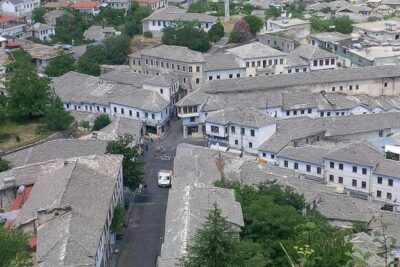
The Stone City & Blue Eye- The monument of Nature.
Read our review →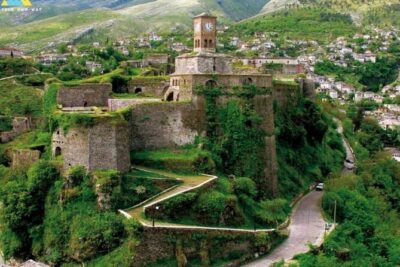
Gjirokastra UNESCO & Ksamil Beach – From Tirana/Durres/Golem
Read our review →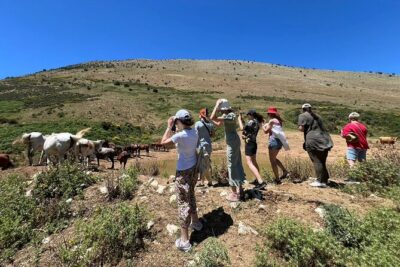
1-Day Tour in Blue Eye, Monastery, Gjirokaster and Lekursi Castle
Read our review →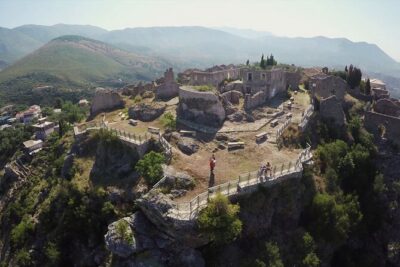
Gjirokastra, Blue Eye, Ksamil & Saranda – Day Tour from Tirana
Read our review →
Blue Eye, Gjirokaster & Lekures | Private & Small Group Tours
Read our review →
Gjirokastra & Bylis Illyrian City Day tour Tirana/Durres/Golem
Read our review →
Walking Tour Baazar – The Argjiro Castle – Zekate house
Read our review →Browse the lists this tour appears in