
Reviewed · UNESCO HERITAGE TOURS
UNESCO Heritage Sites in Albania on 3 day tour
Butrint’s ancient stones, Gjirokastër’s steep cobbled lanes, and Berat’s hillside houses make this a strong introduction to Albania’s past. In three days, you cover sites spread across the south and central coast, with scenery changing from seaside roads to mountain towns and olive-covered countryside.
I like the private format, since your group travels together rather than joining a large coach. I also like the mix of famous UNESCO places and important sites such as Apollonia and Durrës, which are presented as candidates for future UNESCO recognition. The main drawback is the amount of driving, especially the nearly four-hour trip from Tirana to Butrint on the first day.
Key points to know before booking
- Butrint requires a long first-day drive: The journey from Tirana takes almost four hours, including short breaks.
- Gjirokastër is explored from bazaar to castle: You walk through the old market area before reaching the fortress above town.
- Berat includes a local taste: At a guesthouse, you may try traditional gliko and Turkish coffee.
- The tour is private: Only your group takes part, with an air-conditioned vehicle and pickup offered.
- Lunch and dinner cost extra: Entrance fees for Butrint and Apollonia are included, but meals are not.
- Guides receive the strongest praise: Zeni and Skerdi are named for their friendly manner, clear explanations, and strong knowledge of Albanian culture.
Why this three-day route works
This is not a short city tour with one landmark each day. It is a broad sweep through Albania’s southern and central heritage sites, linking Greek, Roman, Byzantine, Ottoman, and modern Albanian stories.
You begin with Butrint, one of the country’s major archaeological sites, then move to Gjirokastër and Berat, two old towns where people still live among centuries-old buildings. Apollonia adds another ancient stop, while Durrës brings the trip back to the coast and its Roman past.
That variety is the tour’s main strength. You are not looking at the same kind of ruin for three days. One hour you may be walking among ancient foundations, and later you may be climbing a stone street toward a hilltop castle.
The route also gives you a useful sense of Albania’s size. The country is compact, but roads through the mountains and along the coast can make distances feel longer than they appear on a map. You should think of this as a sightseeing road trip with major stops, not a slow-paced base-and-explore holiday.
More History Tours in Tirana
- Tirana Walking Tour: History, Culture &Gems by a Passionate Guide
★ 5.0 · 52 reviews - Walking tour of Tirana; History & Culture
★ 5.0 · 37 reviews - Private Full-Day Historical Day Tour in North Macedonia and Albania
★ 5.0 · 18 reviews
Day one: Butrint, Saranda, and Gjirokastër
The first day begins at 9:00 a.m. with pickup in Tirana. The road south takes almost four hours, with short breaks along the way. You pass toward the coastal area around Saranda and Ksamil, known for some of Albania’s most attractive beaches.
The drive is a major part of the day. I would not book this tour expecting to reach Butrint quickly, but the changing scenery gives the trip a clear sense of place. If you prefer a full day of walking with little time in the vehicle, this schedule may feel demanding.
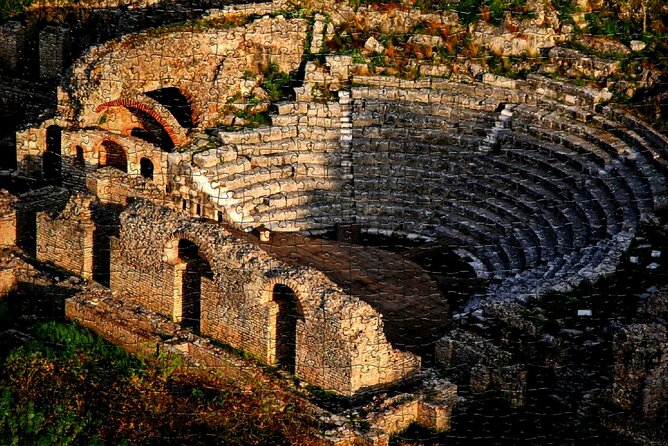
Butrint’s ancient ruins and wooded setting
Butrint National Park is the first major stop, with about an hour at the archaeological park. The entrance fee is included, so you do not need to budget separately for admission here.
Butrint is valuable because the setting and the ruins work together. Ancient remains sit within a protected park, giving the site a quieter, more natural feel than an exposed ruin beside a modern city. You can expect a compact introduction to the ancient city, with your guide explaining what you are seeing rather than leaving you to read signs alone.
The one-hour visit is enough for a first look, but it is not an exhaustive archaeological study. If you enjoy lingering at every wall and inscription, you may want more time. The schedule favors a broad overview of Albania’s major sites.
A short coastal break in Saranda
After Butrint, the group stops in Saranda for about an hour. This is a free stop, with time for a walk along the seafront promenade and lunch.
Lunch is not included, so you pay for your own meal. The stop gives the day a welcome change of pace after the archaeological visit, and the waterfront is a natural place to stretch your legs. Since the stop is only about an hour, you should keep lunch simple and watch the time.
Saranda is also a useful contrast to the old stones of Butrint. Here, the focus shifts to Albania’s present-day coastal life, with the sea, promenade, restaurants, and port setting replacing ancient ruins.
More UNESCO Tours in Tirana:
- Small Group Tour; Pearls of Albania in 8 Days (3 UNESCO Sites)
★ 5.0 · 29 reviews - Albanian Highlights – UNESCO sites ,Nature and Food tour
★ 5.0 · 13 reviews - Albania: Mini UNESCO Food Tour – 4 Days
★ 5.0 · 8 reviews - UNESCO heritage in Albania – 4 days
★ 5.0 · 3 reviews
Gjirokastër’s stone streets and old bazaar
After lunch, you continue to Gjirokastër, a UNESCO World Heritage city built on the side of Mount Gjere. The old town sits on a hill above the valley, so expect sloping streets and uneven cobbles.
Gjirokastër is often called a museum city because its Ottoman-era character remains unusually clear. The appeal is not just one building. It is the whole arrangement of steep lanes, stone houses, old market spaces, and views across the valley.
You spend about two hours in Gjirokastër, including the bazaar and castle. That is a useful amount of time for a first visit, though the hills make the walking feel more substantial than the clock suggests. Comfortable shoes are a practical choice.
The bazaar receives a brief 15-minute visit. Its main square is named for Cerciz Topulli, an Albanian patriot of the 19th century. The market area grew during the Ottoman period as a center for trade and local news. Today, it provides a quick look at the town’s commercial heart before you climb toward the fortress.
Gjirokastër Castle above the valley
Gjirokastër Castle sits above the town and is reached by walking through the bazaar. The fortress has served military and political purposes over the centuries, including use as a prison. Its walls and stone surfaces are imposing, but the views are just as important as the structure itself.
The castle visit lasts about 30 minutes, with admission included. That is enough to see the main setting and hear its story, but not enough for a detailed examination of every corner.
I particularly like the order of these stops. You first see the town at street level, then understand its position from above. The bazaar shows how people moved, traded, and met; the castle shows why this hill mattered.
Day two: Apollonia and Berat’s hilltop quarter
Day two shifts from the far south toward central-southern Albania. The first stop is Apollonia, followed by Berat and its castle quarter.
Apollonia’s ancient remains among open countryside
Apollonia lies about 13 miles from Fier in southwestern Albania. You spend about an hour in the archaeological park, and admission is included.
The site is known for the way ancient remains sit within open countryside. Instead of seeing ruins surrounded by dense urban development, you get a setting where monuments and nature share the same space. That makes Apollonia feel calm and spacious.
The visit is best for anyone who wants more than the best-known Albanian sites. Apollonia is presented as an important place that could receive UNESCO recognition in the future, while also offering a distinct experience from Butrint.
As with Butrint, one hour provides an introduction rather than a complete study. You will have time to understand the importance of the site and see key remains, but the tour keeps moving to fit Berat into the same day.
Berat, the City of a Thousand Windows
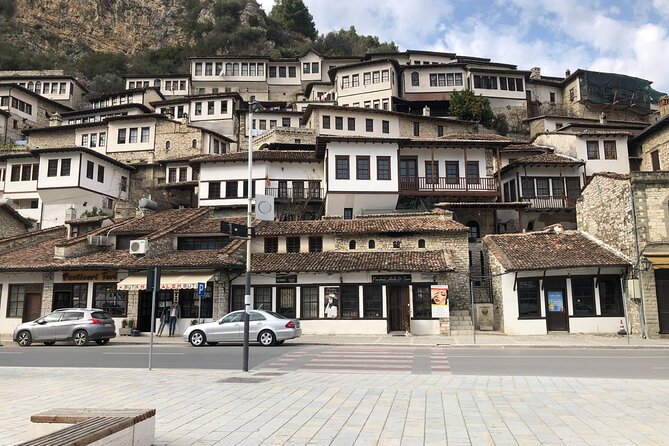
Berat is one of the tour’s strongest stops. The city has been on the UNESCO World Heritage list since 2008 and has more than two thousand years of history. Its familiar nickname, the City of a Thousand Windows, comes from the stacked houses climbing the hillsides.
You spend about two hours in Berat. The old city is not simply a preserved display. It remains part of a living town, which makes the visit feel more grounded than a walk through an empty monument.
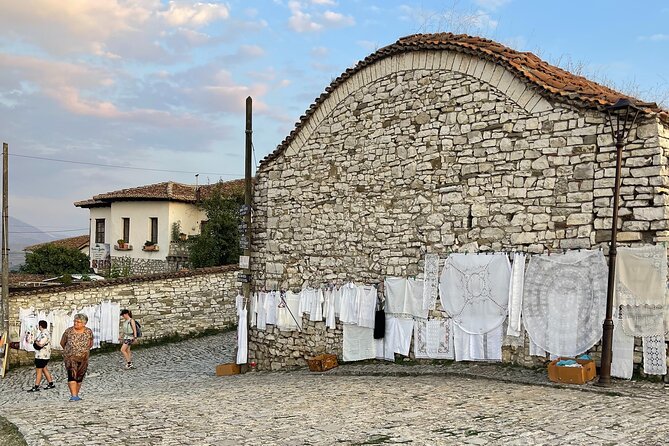
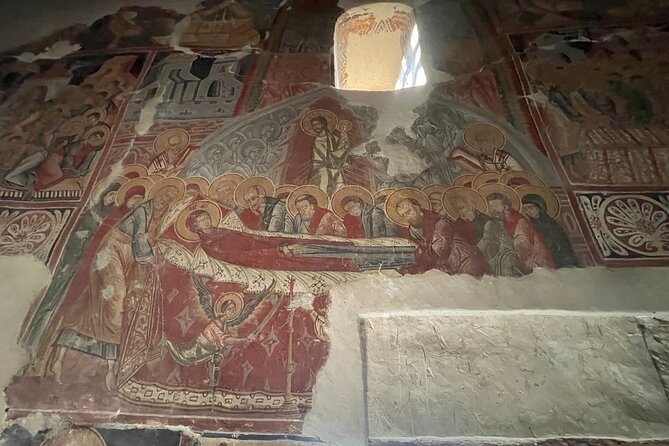
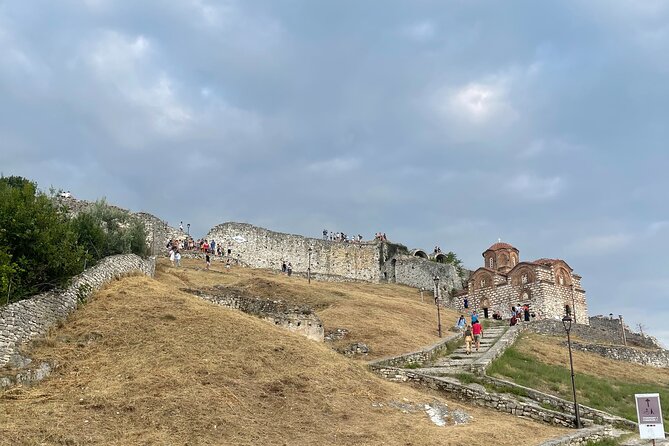
The city’s most important quarter is Kalaja, or Berat Castle. It sits above the town and contains churches, houses, and other buildings within its walls. Much of the quarter reflects the Christian Orthodox tradition, with several churches dating to the 14th century.
The climb toward the castle is part of the experience. You should expect stone streets and an uphill route. The reward is a broad view over Berat and a closer look at how the old quarter was arranged.
Berat Castle and a taste of local tradition
The castle quarter receives about an hour of focused time. Its walls date mainly from the 13th century, and the area also includes Byzantine churches and Ottoman mosques.
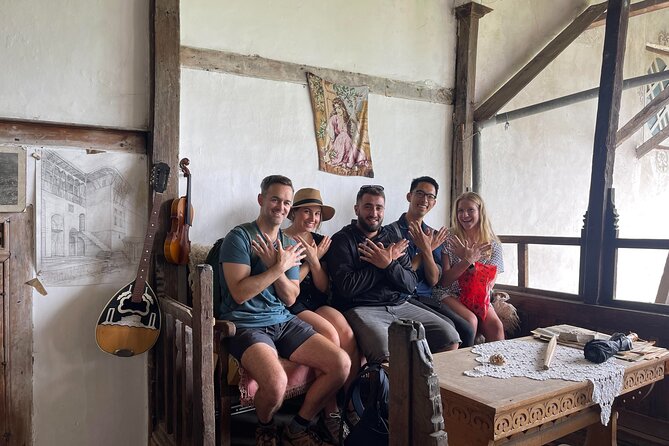
A particularly nice touch is the chance to try gliko and Turkish coffee at a local guesthouse. Gliko is a traditional sweet preserve, and the stop adds a small food and hospitality moment to a day otherwise centered on architecture.
This is not a cooking class or a long meal, and lunch and dinner remain your responsibility. Still, the guesthouse visit helps connect the stone buildings with everyday Albanian customs.
Berat works well after Apollonia because the two stops offer different kinds of history. Apollonia is an ancient archaeological park in an open setting. Berat is a living hill town where architecture, religion, and daily life remain closely linked.
Day three: Durrës Amphitheatre and the return to Tirana
The final day takes you to Durrës, Albania’s coastal city, before returning to Tirana. The Durrës stop lasts about an hour.
Ancient gladiator history beside the Adriatic
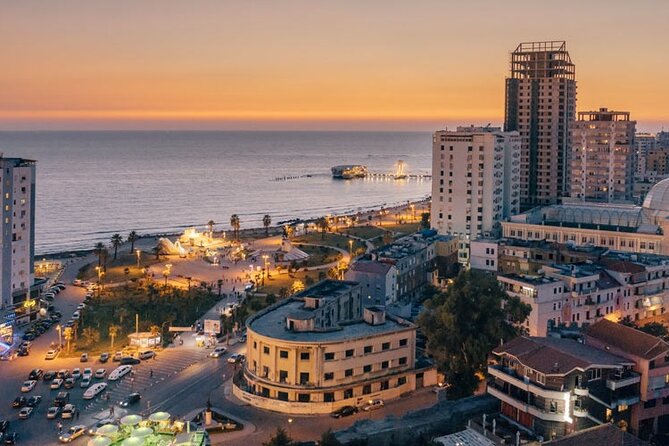
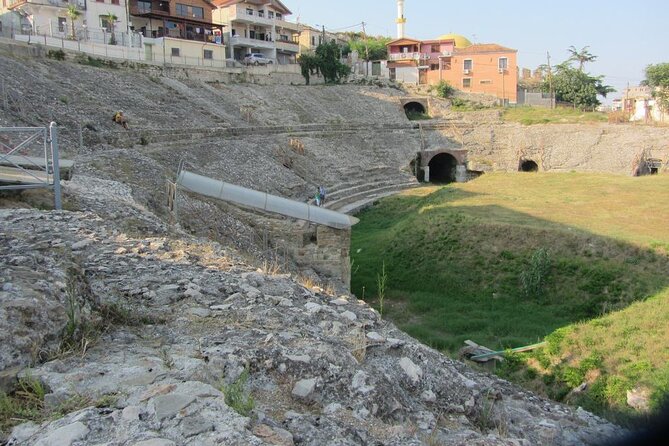
Durrës combines a seaside promenade with an important Roman-era amphitheatre. You can take a leisurely walk along the main waterfront, then visit the amphitheatre, a place associated with gladiatorial contests.
The contrast is the point. One part of the visit looks out to the sea and present-day coastal life. The other turns inland toward one of the city’s oldest surviving landmarks.
Admission to Durrës is listed as free, and the tour ends in Tirana after the visit. Since the stop is only about an hour, you should expect a compact introduction rather than extensive free time in the city.
Durrës is also described as another site awaiting UNESCO recognition. That gives the final day a useful link to the earlier stops at Apollonia. The tour is not limited to Albania’s official UNESCO places. It also shows you sites that may gain wider recognition later.
What the $520.40 price means
At $520.40 per person, this is not a budget bus excursion. The price needs to be judged against what is included: three days of private touring, an air-conditioned vehicle, pickup, all listed taxes and fees, and entrance to Butrint and Apollonia.
The private arrangement is the main value. Only your group takes part, so the pace and conversation should be more personal than on a large shared tour. Group discounts are offered, which may make the cost more reasonable if several people book together.
You still need to pay for lunches and dinners. That matters because the route covers long days and several towns, so meal costs can add up. The price also does not turn the trip into a luxury package. Its value is in the transport, route planning, access, and guide rather than in included dining or high-end lodging details, which are not specified.
For a first visit to Albania, I see the price as reasonable if you want the major southern heritage sites covered efficiently and prefer a private vehicle. If you already have a rental car and plenty of time, you may find it cheaper to arrange the route yourself. You would then need to handle the driving, navigation, admission, and timing on your own.
The guides and the feel of the experience
The strongest personal element is the guide. Zeni is praised for making the history easy to follow while keeping the mood relaxed and friendly. Skerdi is also named for clear explanations of Albanian history and culture.
That matters on this route because many of the sites require context. A pile of ancient stones at Apollonia or a fortress wall in Gjirokastër becomes more useful when you understand its role in the wider story of Albania.
The tour is private, but the group size is not stated. You should confirm the exact vehicle arrangement when booking if that detail matters to you. The service offers pickup, starts at 9:00 a.m., and accepts service animals. Most people can participate, though the old towns and castles naturally involve walking on uneven, sloping surfaces.
Free cancellation is available if you cancel at least 24 hours before the start time. Changes or cancellations made inside that window are not accepted for a refund.
Who should book this tour
I would choose this trip if you have only a few days in Albania and want a guided route through several major cultural sites. It suits couples, families, and small groups who value a private vehicle and want history explained along the way.
It is also a good fit if you want more than Tirana and the coast. Butrint, Gjirokastër, Berat, Apollonia, and Durrës show very different sides of the country.
I would hesitate if you dislike long drives or want a slow schedule. Day one in particular covers a lot of ground, and the stops are fairly brief. You should also be comfortable with hills, stone streets, and castle approaches.
Should you book it?
Book this tour if your priority is coverage. In three days, you see two established UNESCO World Heritage cities, Butrint, Berat, Apollonia, and Durrës, with a guide handling the route and transport.
Skip it if you want long museum visits, extended time at each ruin, or several hours each day to explore independently. For a first, well-organized look at Albania’s southern heritage, the private format, strong guides such as Zeni and Skerdi, and broad mix of sites make this a worthwhile choice.
FAQ
Where does the tour start?
The tour starts in Tirana, with pickup offered. The stated start time is 9:00 a.m.
How long does the drive from Tirana to Butrint take?
The drive takes almost four hours, including small breaks along the way.
Is the tour private?
Yes. Only your group takes part in the activity.
Are entrance fees included?
Entrance fees for Butrint and Apollonia are included. The tour also includes all listed taxes and fees. Admission is listed as free for the Saranda, Berat, Berat Castle, Gjirokastër Bazaar, and Durrës stops.
Are meals included?
No. Lunches and dinners are not included in the price.
Can I cancel for a full refund?
Yes, if you cancel at least 24 hours before the experience start time. Cancellations made less than 24 hours before the start are not refunded.
More 3-Day Experiences in Tirana
- Montenegro, Kosovo & North Macedonia in 3 Days from Tirana
★ 5.0 · 8 reviews - Balkans in 3 Days;Semi – Private Tour Dedicated Tour Leader & Car
★ 5.0 · 6 reviews - 3 Days Get Away in Albania, Car & Driver, Optional-Accommodation
★ 5.0 · 4 reviews - Hiking Tour of Valbona, Theth & Blue Eye in 3 Days from Tirana
★ 5.0 · 73 reviews
Just added around Tirana
- Shen Gjergji Waterfall & Tirana Sunset Included Dinner★ 5.0 · 9 reviews
- Wine Tasting & Vineyards Escape near Tirana★ 5.0 · 18 reviews
- 2-Day Private Ohrid Tour in Skopje, Prishtine Trip and Prizren★ 5.0 · 8 reviews
- Private Transfers from Tirana International Airport to Sarandë★ 4.5 · 3 reviews
- UNESCO heritage in Albania – 4 days★ 5.0 · 3 reviews
- Cooking Class & Traditional Albanian Dinner★ 5.0 · 15 reviews
- Transfers Tirana Airport – Sarande – Ksamil – Airport Tirana★ 4.5 · 3 reviews
- Traditional Albanian and Mediterranean Dinner★ 5.0 · 9 reviews
UNESCO Heritage Tours, compared.
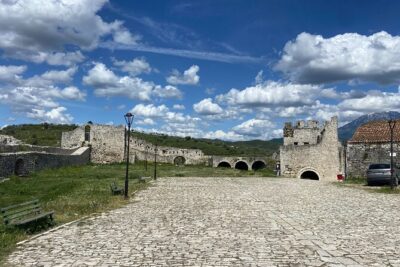
Berat city UNESCO tour, the Castle & Belshi lake- From Tirana
Read our review →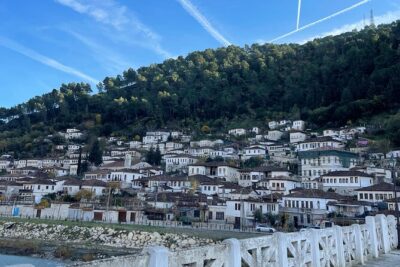
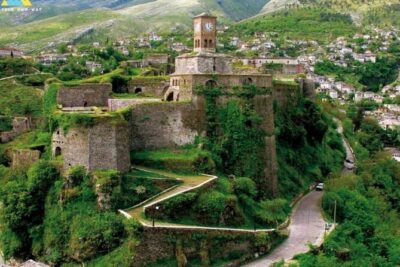
Gjirokastra UNESCO & Ksamil Beach – From Tirana/Durres/Golem
Read our review →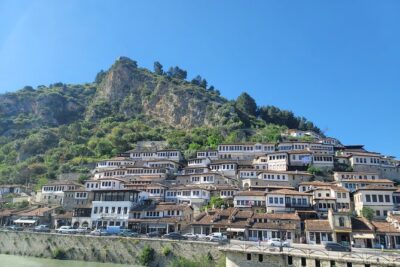
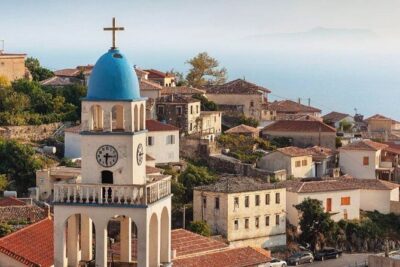
Small Group Tour; Pearls of Albania in 8 Days (3 UNESCO Sites)
Read our review →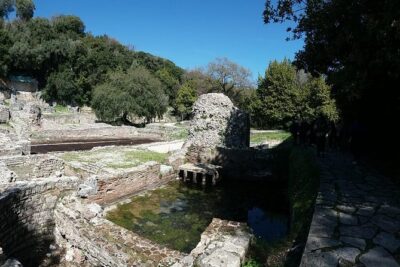
Ancient City of Butrint, UNESCO World Heritage site – A Must
Read our review →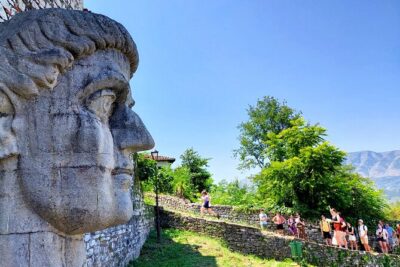
Berat Day Tour: Explore Albania’s UNESCO City from Durres
Read our review →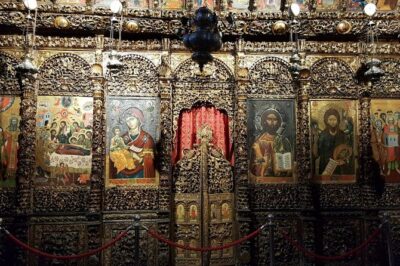
Day tour of Berat UNESCO city , castle and Belshi Lake
Read our review →Browse the lists this tour appears in