
Reviewed · TIRANA TOURS
Tirana by locals
Tirana’s story is written across a compact city center: an Ottoman mosque beside Italian-style government buildings, a former dictator’s villa now surrounded by cafés, and a strange concrete pyramid that refuses to disappear. This local-led walking tour gives you a quick way to connect those pieces rather than seeing them as isolated sights.
I like the focus on Skanderbeg Square and Blloku, since together they show Tirana’s public face and its private, once-forbidden side. I also like the chance to visit the House of Leaves, a former intelligence building that adds real weight to the story. The main trade-off is time: a tour lasting roughly one to two hours can introduce Tirana well, but it cannot give every stop a long visit.
Key points to know before you book
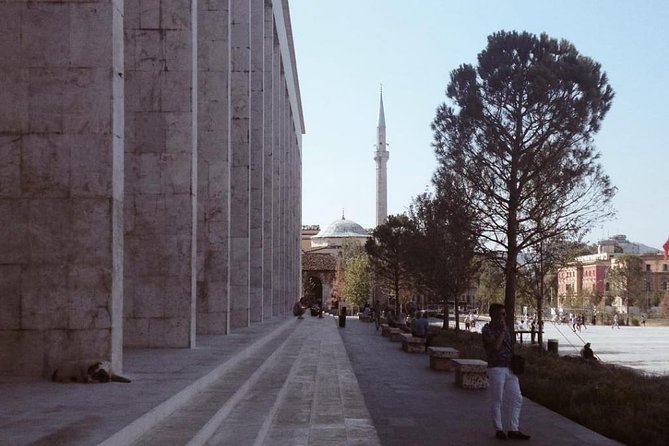
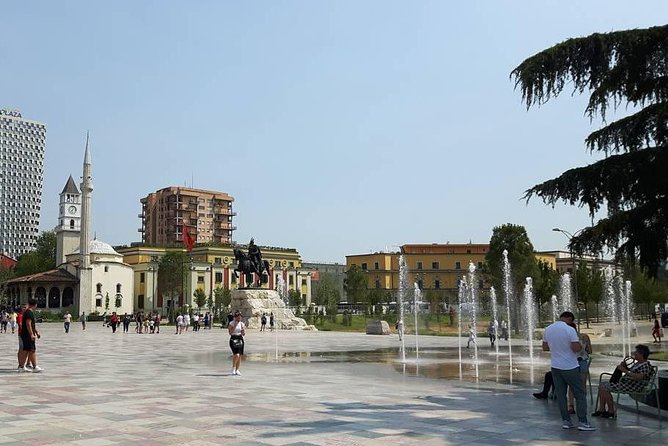
- Start at 9:00 am in Skanderbeg Square: You begin beside Tirana’s central mosque, clock tower, opera house, and National Bank.
- See the city through its political past: The Pyramid of Enver Hoxha and the House of Leaves deal directly with Albania’s communist period.
- Walk into former forbidden territory: Blloku was once reserved for communist officials and now holds cafés, cocktail bars, pubs, and boutiques.
- Expect a small group: The maximum is 15 people, a useful size for asking questions and hearing the guide.
- Budget-friendly city introduction: At $17.36 per person, the tour offers a low-cost overview, but personal spending, meals, drinks, and optional activities are extra.
- Plan for an outdoor walk: Good weather is required, and poor conditions can lead to a new date or a full refund.
Why this short Tirana walk works
Tirana can feel hard to read at first. Its center does not present one neat architectural style or one simple national story. Instead, you find Islamic, Italian, Soviet, communist, and modern Albanian influences close together.
That is where a local guide helps. The point is not simply to reach four landmarks. It is to understand why a mosque, a government building, a former surveillance center, and a nightlife district belong in the same two-hour story.
The tour is especially useful early in your stay. You start and finish at Skanderbeg Square, so you can use the walk to get your bearings before returning to sights that deserve more time. I would treat it as an introduction rather than a full museum visit or a long architectural tour.
The group limit of 15 is another practical advantage. It is not a private walk, but it should be small enough for the guide to keep the group together and respond to questions. The experience is listed as suitable for most people and is near public transportation, though you should still expect ordinary city walking between stops.
A few more Tirana days to weigh up
- Hike Gamti Mountain with Bovilla lake view & canyon- From Tirana
★ 5.0 · 1,280 reviews - Walking Tour of Tirana
★ 5.0 · 646 reviews - Albanian Night Show: Traditional Music, Dance & Dinner in Tirana
★ 5.0 · 431 reviews
Skanderbeg Square and the city’s central symbols
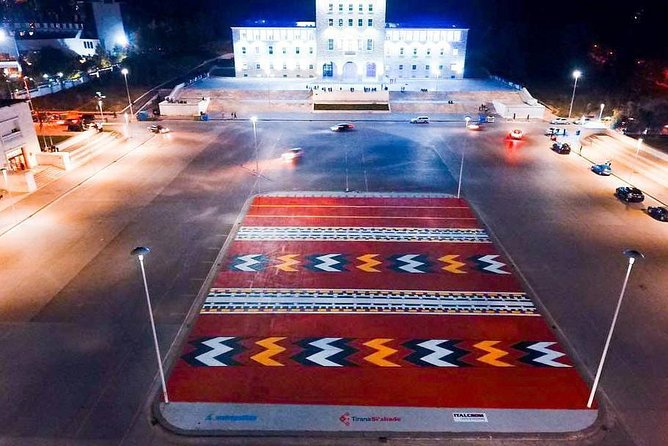
The tour begins in Skanderbeg Square, Tirana’s main public space. This is the right place to start because several of the city’s most recognizable buildings gather around it.
The Et’hem Bey Mosque brings an older Ottoman-era presence to the square. Nearby, the Clock Tower gives the center a strong visual marker and helps you understand the scale of the surrounding district. The National Theater of Opera and Ballet adds a different layer, with its connection to the communist period and the visit of Soviet leader Nikita Khrushchev when its first brick was laid.
You also stop to see the National Bank of Albania. These buildings are more useful when placed in political and urban context, and that is where the guide’s explanation matters more than a quick photograph.
The listed time here is about 10 minutes, with admission included. That is enough for an orientation, not a leisurely inspection of every façade. If you like architecture or photography, you will probably want to return later when the tour is over.
The square is also the practical meeting point. Look for the guide at Sheshi Skënderbej at 9:00 am, and keep your mobile ticket available. Confirmation is provided at booking, which makes the morning arrangement simple.
Enver Hoxha’s Pyramid and an awkward national memory
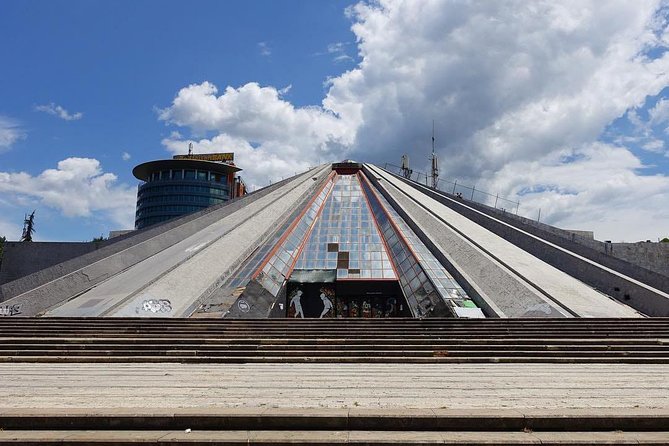
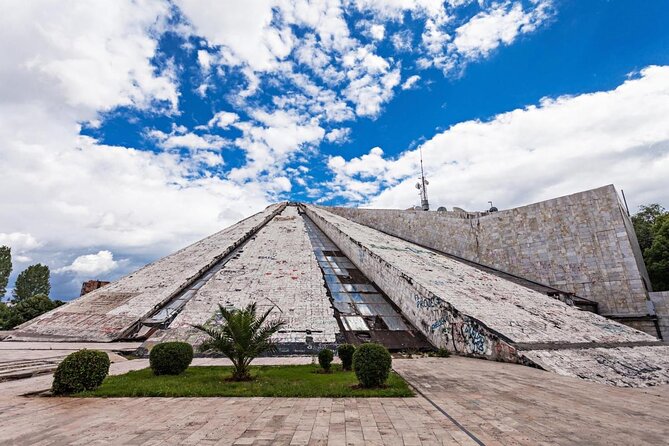
From the square, the walk reaches the Pyramid of Enver Hoxha. This concrete structure was built as a symbol of the former communist leader and has had an uneasy place in modern Tirana.
Previous governments considered destroying it, but the building remained. Its unfinished, disputed character makes it more interesting than a polished monument. You are looking at a structure that has been treated as a burden, a memorial, and a possible public space, depending on the political moment.
The stop lasts about 20 minutes, with admission included. That gives the guide time to explain why the Pyramid remains such a difficult symbol. It also gives you enough time to look closely at the building and hear how Albania continues to deal with its communist past.
I like this stop because it avoids presenting history as a tidy sequence of events. The Pyramid is still there, and its survival says something about how hard it can be for a country to decide what to preserve, remove, or reinterpret.
The drawback is that the stop may leave you wanting more. If the building interests you, ask your guide how it fits into present-day Tirana, then set aside extra time later if you want a fuller look.
The House of Leaves and the human cost of surveillance
The House of Leaves provides the most serious part of the walk. The building once housed Albania’s national intelligence agency and is now a museum about espionage and the harsh reality of communist rule.
This is not just another old building on a sightseeing route. It helps explain how surveillance shaped daily life and why Albania’s recent past can still feel close. The museum also tries to explain that period to younger Albanians and people from outside the country, so the stop has an educational purpose as well as a historical one.
The supplied plan does not give a fixed visit length or state that museum entry is included. That matters. Ask the guide how much time is available and confirm any admission details if you want to go inside rather than simply hear about the building.
If you have limited time in Tirana, this is the stop I would pay closest attention to. The square gives you context, and the Pyramid shows the physical remains of the communist era. The House of Leaves adds the personal and institutional side of that story.
You should also know that this may not be a light or purely entertaining visit. The subject involves spying, repression, and fear. That seriousness is part of its value, but it may not suit someone looking only for cafés and pretty streets.
A completely different kind of day from the same base:
- From Tirana- Hiking Tour to Bovilla Lake & Gamti Mountain
★ 5.0 · 358 reviews - Cooking Classes and Traditional food tasting in Tirana
★ 5.0 · 282 reviews - Local food experience & walking tour of Tirana
★ 5.0 · 192 reviews - Tour a Piedi di Tirana
★ 5.0 · 174 reviews
Blloku, from closed political district to social center
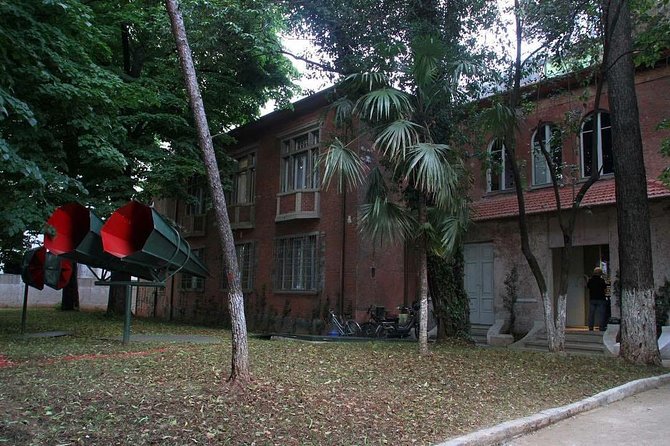
The tour then moves into Blloku, one of the clearest examples of Tirana’s change since communism.
During Enver Hoxha’s rule, this area was reserved for government officials. Ordinary people could not freely enter. Hoxha’s former villa is here, giving the neighborhood a direct connection to the old leadership.
Today, Blloku is known for cafés, boutiques, cocktail bars, pubs, and colorful streets. The contrast is sharp. An area once defined by restricted access is now associated with going out, meeting friends, and spending leisure time.
The walk through Blloku lasts about 25 minutes and admission is free. You will not need a ticket simply to see the neighborhood, making this one of the easiest parts of the experience to continue on your own later in the day.
This is also where the local angle becomes especially useful. A guide can explain how the district is viewed today, not just what it was under Hoxha. The tour information describes it as the most vivid neighborhood of Tirana, but you should think of it less as a formal attraction and more as a place to notice daily city life.
I would return here after the tour if you want coffee, food, or a drink. Those purchases are not included, and neither are alcoholic beverages or lunch. The advantage is that you receive an introduction before choosing a place yourself, rather than being taken to a fixed restaurant.
The Polytechnic University and Tirana’s student side
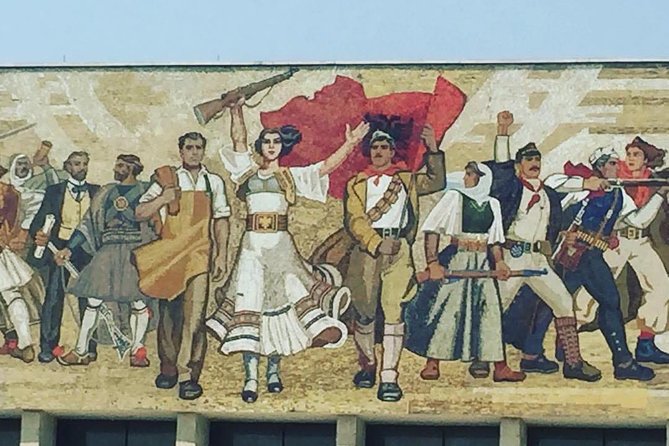
The final listed stop is the Polytechnic University of Tirana. Founded in 1951, it is Albania’s oldest and second-largest university, after the University of Tirana, with roughly 10,000 students from Albania, Kosovo, Macedonia, and Montenegro.
The stop lasts about 15 minutes and is free. It gives the tour a useful change of tone after the heavier communist-era sites and the nightlife setting of Blloku. You see an institution tied to education, engineering, and the city’s younger population.
This stop may be more meaningful if you are interested in modern Albanian society or public institutions. If you prefer famous monuments, it may feel less essential than Skanderbeg Square or the House of Leaves. Still, it helps prevent the tour from becoming only a study of dictators and old buildings.
The tour ends back at the meeting point in Skanderbeg Square. Since the route is built around central sights, you can easily continue sightseeing, find lunch, or use public transportation afterward.
What the guide adds to the experience
A tour like this depends heavily on the guide. The listed provider is Lost In Albania, and the guide is described as a professional local rather than a distant narrator reading dates from a script.
Guide names connected with this provider include Leo, Mimmi, and Eri, though your assigned guide is not specified before booking. The available feedback places particular emphasis on patient, friendly guiding, clear explanations, and personal attention. One account specifically praises Leo’s professionalism and the way he made the experience worthwhile. Another describes Mimmi as a local companion who showed Tirana as Albanians live it.
Those details matter because the route itself is not difficult to find. You can walk past the square, Pyramid, and Blloku on your own. The value comes from having someone explain what changed, what was restricted, and how these places fit into present-day life.
Ask questions as you go. The most useful answers will likely concern the communist period, the role of Hoxha’s villa, the purpose of the House of Leaves, and how Tirana’s center has changed. A small group makes that easier than a large coach tour.
Price, pace, and what you receive for $17.36
At $17.36 per person, this is a modestly priced introduction to Tirana. You receive a professional guide and a route covering several major central sights. For a first morning in the city, I think the cost is reasonable, especially if you value context and do not want to plan your own walking route.
The price does not cover lunch, alcoholic drinks, personal expenses, or optional activities. You should also check the exact admission arrangement for the House of Leaves, since the supplied details do not specify a ticket price or fixed visit length there.
The timing requires realistic expectations. The experience is advertised as approximately one to two hours, while the listed stops account for about 70 minutes before walking time. That means the route is brisk and introductory. You will get a useful framework, not a slow museum day.
The tour is often reserved well ahead of time, with an average booking lead time of about 70 days. That does not mean you must book that early, but it suggests planning ahead if you are visiting on fixed dates. The group maximum is 15, and confirmation arrives when you book.
You can cancel for a full refund up to 24 hours before the local start time. Changes or cancellations inside that window are not refunded. The walk requires good weather, and if poor conditions cancel it, you are offered another date or a full refund. A minimum group size also applies, with the same choice of a different date, another experience, or a refund if it is not met.
Who should book this walking tour?
I would recommend it to you if this is your first visit to Tirana and you want the city’s main story explained in a short morning walk. It suits anyone interested in Albania’s Ottoman, Italian, communist, and modern chapters, especially if you want more than a list of monuments.
It is also a good fit if you prefer local guidance to a self-guided route. The guide can connect places that seem unrelated, and the small group size leaves room for questions.
You may want something longer if you expect extensive museum time, detailed architecture, or a full-day city program. The walk is not designed around a meal, a long indoor visit, or a large number of attractions. It gives you a starting point.
Should you book Tirana by locals?
Book this tour if you want a low-cost, compact introduction to Tirana’s central sights and its difficult recent past. The strongest parts are the contrast between Skanderbeg Square and Blloku, the serious stop at the House of Leaves, and the chance to ask a local guide how the city has changed.
Skip it if you already know central Tirana well or prefer to explore at your own slow pace. Otherwise, the two-hour route is a sensible first look. Start early, listen closely at the House of Leaves and Pyramid, and return later to Blloku or the square for the time the short tour cannot provide.
FAQ
Where does the tour start?
The tour starts at Skanderbeg Square, Sheshi Skënderbej, in Tirana, Albania.
What time does the tour begin?
The scheduled start time is 9:00 am.
Where does the tour end?
The activity ends back at the meeting point in Skanderbeg Square.
How long does the tour last?
The experience lasts approximately one to two hours.
What sights are included?
The route includes Skanderbeg Square, the Enver Hoxha Pyramid, the House of Leaves Museum, Blloku, and the Polytechnic University of Tirana.
How large is the group?
The maximum group size is 15 people.
Is food or drink included?
No. Lunch, alcoholic beverages, personal expenses, and optional activity costs are not included.
Can I cancel for a full refund?
Yes. You can cancel at least 24 hours before the local start time for a full refund. Poor weather or failure to meet the minimum number of participants may also result in a different date or a full refund.
Just added around Tirana
- Shen Gjergji Waterfall & Tirana Sunset Included Dinner★ 5.0 · 9 reviews
- Wine Tasting & Vineyards Escape near Tirana★ 5.0 · 18 reviews
- 2-Day Private Ohrid Tour in Skopje, Prishtine Trip and Prizren★ 5.0 · 8 reviews
- Private Transfers from Tirana International Airport to Sarandë★ 4.5 · 3 reviews
- UNESCO heritage in Albania – 4 days★ 5.0 · 3 reviews
- Transfers Tirana Airport – Sarande – Ksamil – Airport Tirana★ 4.5 · 3 reviews
- Cooking Class & Traditional Albanian Dinner★ 5.0 · 15 reviews
- Traditional Albanian and Mediterranean Dinner★ 5.0 · 9 reviews
Tirana Tours, compared.
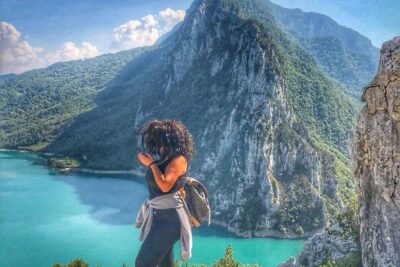
Hike Gamti Mountain with Bovilla lake view & canyon- From Tirana
Read our review →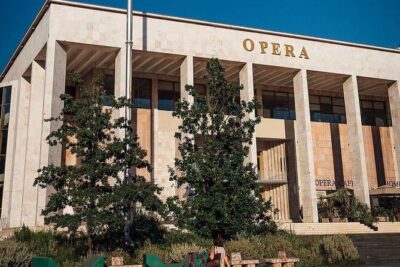
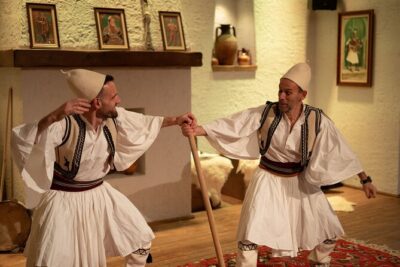
Albanian Night Show: Traditional Music, Dance & Dinner in Tirana
Read our review →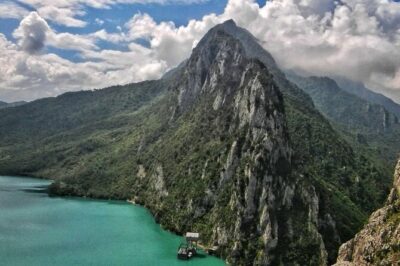

Cooking Classes and Traditional food tasting in Tirana
Read our review →
Best of Local Food & City Tour of Tirana – Food & Drinks Included
Read our review →Browse the lists this tour appears in