
Reviewed · TIRANA TOURS
Small Group Tour; The Balkans & Central Europe – Tirana to Vienna
The best thing about this 14-day journey is its reach. You move from Albania’s mountain towns to Kosovo, the Adriatic coast, Bosnia, Serbia, Hungary, Slovakia, and Austria without having to arrange a string of buses, border crossings, hotels, and local guides yourself. I especially like Kruja’s old bazaar and the chance to see both Ottoman and Austro-Hungarian influences in places such as Sarajevo, Novi Sad, Budapest, and Bratislava.
I also like the small maximum of 10 people, private transport, and the mix of famous sights with less expected stops such as Rahovec’s wine country, Mrizi i Zanave farm, Subotica, and Győr. The tradeoff is the pace: you cover a lot of ground, and several days include border crossings followed by short sightseeing visits. You should be comfortable with early starts, long drives, and walking on cobblestones.
What makes this journey worth considering
- Eight countries in 14 days: Albania, Kosovo, Montenegro, Bosnia and Herzegovina, Serbia, Hungary, Slovakia, and Austria are linked in one overland route.
- A maximum of 10 people: The small group size should make border days, hotel transfers, and city walks easier to manage.
- Private transportation throughout: You avoid piecing together regional bus and rail connections, especially across several borders.
- Major UNESCO sights: See Kotor, Mostar, Blagaj, Dečani Monastery, Buda Castle, and other important cultural sites.
- Food and wine are part of the route: Rahovec, Sremski Karlovci, Mrizi i Zanave, Sarajevo, and Hungary all bring local tastes into the trip.
- A useful one-way plan: Starting in Tirana and ending with hotel drop-off in Vienna makes sense if you want to continue through Central Europe.
From Kruja’s bazaar to Prizren’s stone bridges
Your first morning begins at 9:00 a.m. with a drive to Kruja, a hill town linked to Albania’s resistance against Ottoman expansion. The setting matters here. The city sits high on rocky ground, and the castle’s position helps explain why Kruja was such an important defensive center.
The most enjoyable part is the Medieval Old Bazaar, where narrow lanes and wooden shops sell carpets, jewelry, and handmade goods. This is a better place for a souvenir than a generic airport shop, but allow yourself time to look carefully. The tour gives you about an hour in the bazaar, followed by a visit to Kruja Castle.
The castle visit includes old paths used by locals to leave the fortress during attacks. Expect uneven ground and a little uphill walking. The stop is short, so you will get an introduction rather than a long archaeological study.
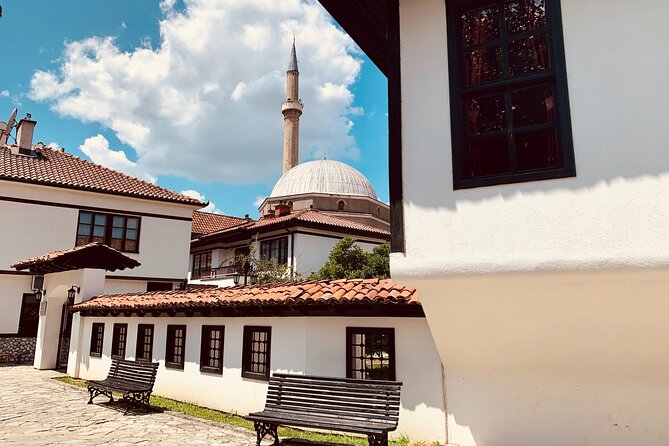
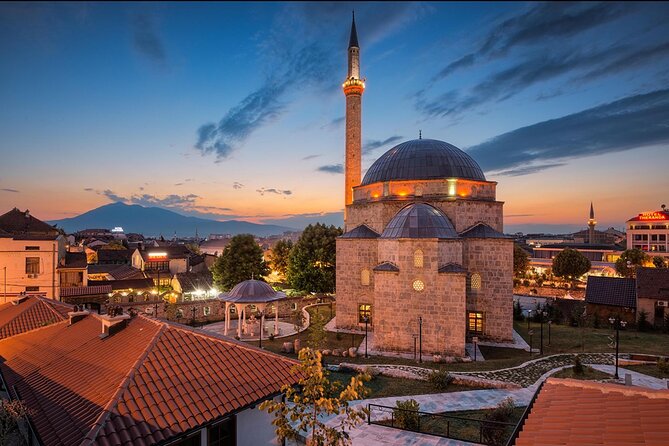
After crossing into Kosovo, you reach Prizren. The river, stone bridges, old houses, and Ottoman-era buildings give the center a strong sense of place. The Sinan Pasha Mosque is the key interior visit, with patterned decoration and colored details. You then climb to Prizren Fortress for a wide view over the town.
Prizren also gives you free time, which is useful after a day of driving. You can look for local filigree work, a metalworking craft closely linked to the city, or simply sit near the river. If your dates fall in August, the Dokufest film festival can add a lively cultural layer, although the festival is not part of the tour itself.
A few more Tirana days to weigh up
- Hike Gamti Mountain with Bovilla lake view & canyon- From Tirana
★ 5.0 · 1,280 reviews - Walking Tour of Tirana
★ 5.0 · 646 reviews - Albanian Night Show: Traditional Music, Dance & Dinner in Tirana
★ 5.0 · 431 reviews
Gjakova, Dečani, and Kosovo wine country
Day two moves through western Kosovo. Gjakova’s old bazaar is a practical stop for lunch and local crafts. The market was damaged several times during regional conflicts and later rebuilt, so it offers a clear example of how local commerce and public life returned to an old setting.
The Dečani Monastery is one of the most important religious and artistic stops on the route. Orthodox monks still live there, and the monastery is known for its frescoes from the 14th century. Dress and conduct should be respectful at a religious site. The schedule allows about an hour, enough to see the main setting and artwork without turning the visit into a lengthy study.
The day ends in Rahovec Valley, an area known for grape growing. Vine cultivation here goes back to Illyrian times, and the vineyards sit on gentle hills at roughly 350 to 520 meters. You are given about an hour in the area. The annual wine festival takes place in September, but the tour does not promise festival access or a formal tasting, so consider the stop a regional introduction rather than a full wine excursion.
Mrizi i Zanave and northern Albania
The third day brings a different kind of experience at Mrizi i Zanave, a farm and slow-food center in Albania. You walk around the property, hear how the family business developed, and see how old communist-era buildings were adapted for storage and food production.
This stop adds needed variety. After several historic towns and religious sites, you get a look at present-day rural enterprise. The farm works with local products and has created jobs in the surrounding area. You have free time to eat a traditional lunch or buy fresh products, though lunch is not included in the tour price.
In the afternoon, you continue to Shkoder, one of Albania’s oldest cities. Rozafa Castle is the main visit, with views toward Lake Shkoder and the rivers flowing toward the Adriatic. The castle setting is impressive, but the one-hour visit means you will need to focus on the main viewpoints rather than explore every corner.
Shkoder also has a strong Venetian influence, including handmade masks connected with its February carnival. The timing of your tour matters here. You may see more of that local tradition if you visit during carnival season, but the festival is not guaranteed.
Montenegro’s coast and the walls of Kotor
The route reaches Montenegro on day four, beginning with a photo stop near Sveti Stefan. The former fishing village now operates as an exclusive residential resort, and the island cannot be visited as part of this stop. You see it from the coast, take in the view, and continue.
Budva offers a compact look at Montenegro’s coastal culture. The newer part has modern buildings, shops, restaurants, and bars, while the old center has churches and medieval streets. The scheduled visit is about an hour, so you will get the outline of the town rather than a slow beach day.
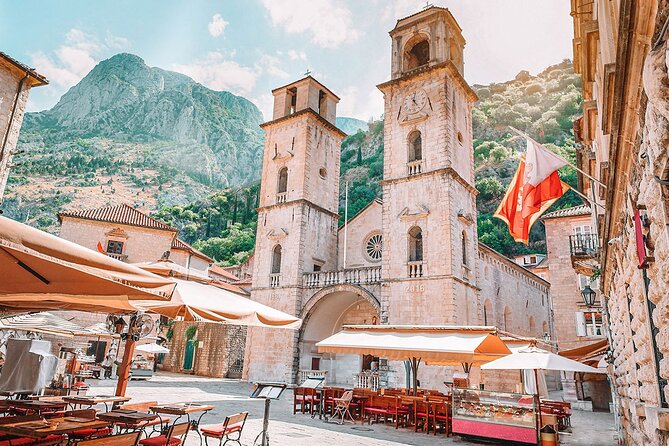
Kotor deserves your attention. Its UNESCO-listed old town is built as a maze of narrow cobbled streets, originally useful for confusing attackers. You visit St. Luke’s Church and have time to notice the dated plaques on old buildings. The walk is atmospheric, but cobblestones and uneven surfaces require sensible shoes.
This is one of several days when the schedule favors coverage over lingering. If Kotor is a personal priority, use the free moments well and ask your tour leader how much independent time is available.
A completely different kind of day from the same base:
- From Tirana- Hiking Tour to Bovilla Lake & Gamti Mountain
★ 5.0 · 358 reviews - Cooking Classes and Traditional food tasting in Tirana
★ 5.0 · 282 reviews - Local food experience & walking tour of Tirana
★ 5.0 · 192 reviews - Tour a Piedi di Tirana
★ 5.0 · 174 reviews
Mostar and Sarajevo, two very different Bosnia stops
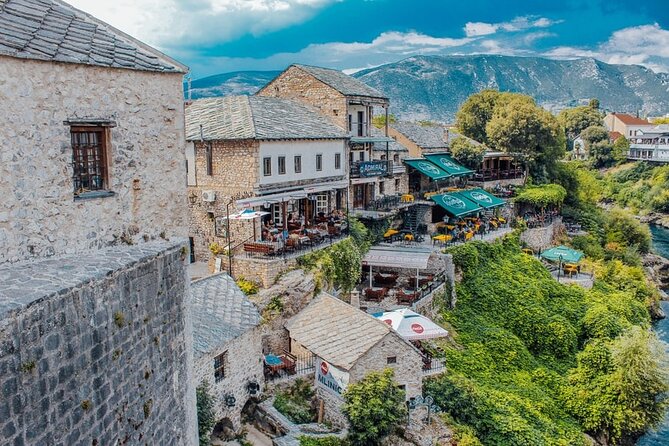
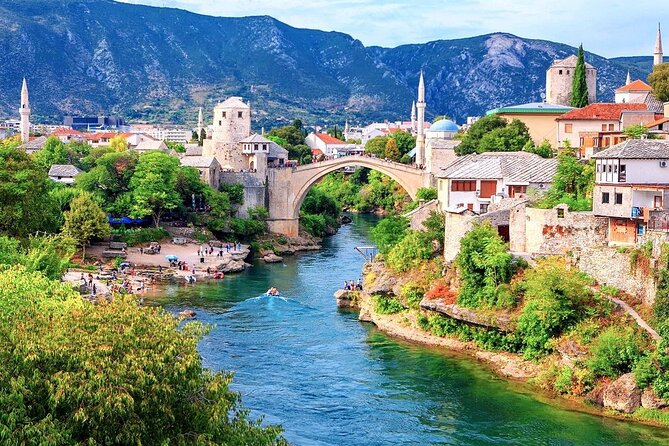
On day five, you cross into Bosnia and Herzegovina and arrive in Mostar. The Old Bridge, or Stari Most, is the centerpiece. Built in the 16th century in an Islamic architectural style, it links the two sides of the old city and remains one of the most recognizable sights in the region.
Around the bridge, the old bazaar has stone lanes, shops, mosques, and Turkish-influenced details. The words Don’t Forget appear around the city, a reminder that Mostar’s beauty cannot be separated from its wartime past. You should expect a busy historic center, uneven walking surfaces, and plenty of time to explore independently in the afternoon.
Blagaj, outside Mostar, is a quieter stop. The tekija sits beneath a cliff beside the source of the Buna River, where clear blue water forms the setting for an Ottoman-era religious complex. The scenery is a welcome change after the packed streets of Mostar.
Day six takes you to Sarajevo. The city’s Ottoman, Austro-Hungarian, Jewish, Orthodox, and Catholic influences explain why it is often described as a European Jerusalem. You walk through markets, religious buildings, and streets where bullet holes and cannon marks still reveal the damage of the Yugoslav War.
The Latin Bridge is an essential stop because of its link to the event that triggered World War I. Sarajevo is also a good place to eat. The schedule allows free time for traditional meat dishes and desserts, so keep part of your budget for a relaxed meal in the old town.
Zvornik, Belgrade, and Serbia’s wine towns
Before Belgrade, you stop in Zvornik along the Drina River. This is a slower pause for lunch and a walk through the streets. It breaks up the drive, though it is not one of the trip’s major headline sights.
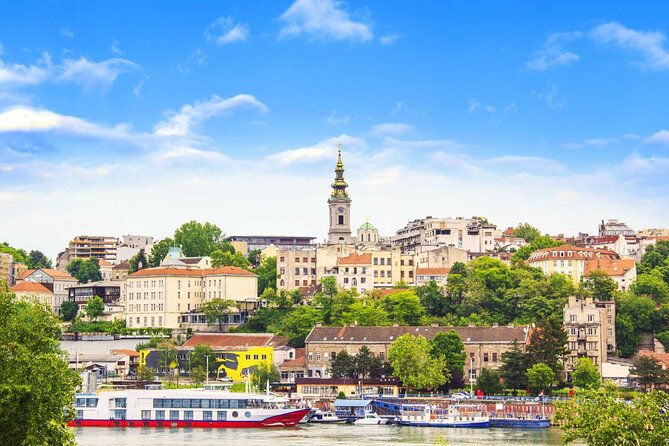
Belgrade begins with Kalemegdan Park and Belgrade Fortress, set above the meeting point of the Sava and Danube rivers. The views are a highlight, especially around the Pobednik monument. From there, the walk continues along Knez Mihailova toward Republic Square, giving you a useful first look at the city center.
The next day focuses on Sremski Karlovci and Novi Sad. Sremski Karlovci is a small Baroque town with old wine cellars, a central Four Lions fountain, and a strong place in Serbian cultural and religious life. The tour gives you two hours, including time to taste regional wine specialties if you choose to pay for them yourself.
Novi Sad, visited on day nine, has a different feel. Its position between former Ottoman and Austro-Hungarian spheres is visible in the architecture. Petrovaradin Fortress, often called the Gibraltar on the Danube, is the main sight, while Zmaj Jovina and Dunavska streets are good for an easy walk and independent meal.
You spend the night in Novi Sad, which is a welcome pause in the middle of the route. It gives you more breathing room than a quick photo stop and lets you experience the city after the main tour walk.
Subotica, Budapest, and the Danube capitals
Subotica is one of the more distinctive stops because of its colorful Austro-Hungarian architecture and multicultural character. The City Hall dominates the central square, rather than a cathedral, and the surrounding park and fountains create a pleasant place to begin your walk.
You have three hours here, enough for lunch and time to explore beyond the main square. Subotica is known for local food and wine, and the slower pace makes it a good counterpoint to Belgrade and Budapest. Later, you cross into Hungary and continue to Budapest.
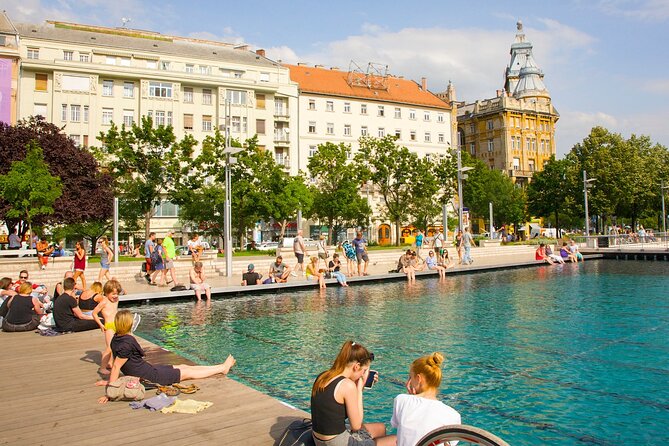
Budapest receives a full sightseeing day. You see St. Stephen’s Basilica, the Opera, Parliament, Heroes’ Square, and Fisherman’s Bastion. The city’s division by the Danube gives the visit a clear structure: Buda feels hillier and more historic, while Pest has broad boulevards and major civic buildings.
Buda Castle is the main included entry. The castle district and its Baroque streets provide some of the best city views, especially across the river. You also get a free evening, which is important because Budapest is at its best after dark, when the bridges and riverfront are lit.
Győr and Bratislava before Vienna
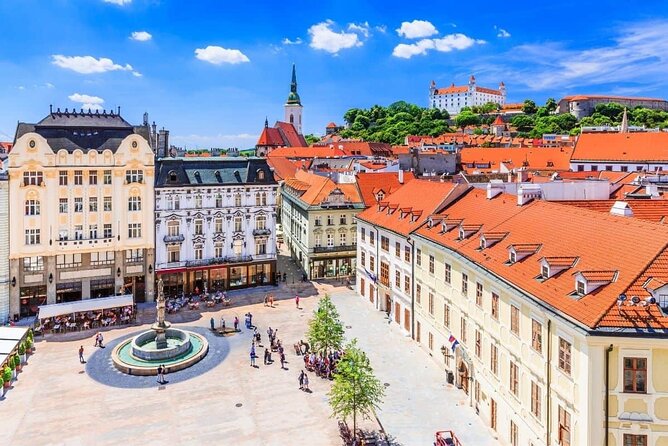
Győr is a short but pleasant stop on day twelve. The City Hall has a 59-meter tower, while the Cathedral of the Virgin Mary and the old synagogue add religious and architectural variety. Baross Gábor Way is pedestrian-only and lined with cafés, shops, bars, and restaurants.
You have time for Hungarian food and, if it appeals to you, the local blueberry beer. This is a compact visit, so think of Győr as a taste of Central European town life rather than a full city tour.
Bratislava receives more attention on days twelve and thirteen. The Old Town includes the medieval Old Town Hall, churches, cultural institutions, and diplomatic buildings. Michael’s Gate is the only preserved gate from the medieval fortifications, making it an easy landmark during your walk.
The climb to Bratislava Castle rewards you with views over the Danube and city. The walk is uphill, but the visit is short enough for most people who are comfortable on foot. Afterward, you have free time for one of Bratislava’s traditional cafés.
On day fourteen, the tour leader drops you at your hotel in Vienna. There is no full Vienna sightseeing program, so plan extra nights if you want to see the imperial center, museums, or major palaces.
Price, hotels, transport, and daily comfort
The listed price is $4,876.33 per person, based on double, twin, triple, or quadruple occupancy in 3-star hotels. That is a serious cost, but it covers 14 breakfasts, private transportation, a professional tour leader, hotel pickup in Tirana, hotel drop-off in Vienna, road and tourist taxes, petrol, and entry fees for the included sites.
The value comes from convenience and route design. Eight countries, multiple borders, and a one-way journey would be awkward to organize independently. Private transport is especially useful in Kosovo, Montenegro, Bosnia, and Serbia, where a neat rail route is not always available between the places on this schedule.
You still need to budget for every lunch, dinner, drink, snack, souvenir, and optional wine or food purchase. The price also assumes shared rooms. Ask about the single-room cost before booking if you are not sharing.
The group limit of 10 is one of the strongest practical features. It should make the vehicle less crowded and let you ask questions during long drives. The pace remains demanding, though. Some sightseeing blocks last only an hour, and border delays, weather, strikes, holidays, or temporary closures can change the plan.
Past tours with the same operator have included guides named Sokol and Mandi, both praised for making historical visits more engaging. Your assigned leader may be different, so treat those names as useful examples rather than a promise.
Who should book this route?
You should consider this tour if you want wide regional coverage more than a slow stay in one country. It suits people who enjoy history, city walks, changing scenery, local food, and the ease of having transport and hotels handled.
It is less suitable if you want long beach time in Montenegro, extended museum visits in Budapest, or a relaxed schedule with late mornings. The route is also a poor fit for anyone who dislikes cobblestones, hills, border crossings, or frequent hotel changes.
The activity is generally open to most people, but the itinerary includes uneven ground at sites such as Sarajevo, Kruja, Kotor, and fortress areas. You need your own health and travel insurance. Tips are not required, but a gratuity for good service is customary as an international practice.
Should you book the Tirana to Vienna tour?
Book it if the appeal of this trip is seeing how the Balkans connect with Central Europe. You get major sights such as Mostar, Kotor, Sarajevo, Budapest, and Bratislava, plus smaller places such as Rahovec, Sremski Karlovci, Subotica, and Győr that many first-time visitors would otherwise miss.
Before committing, make sure you are comfortable with the fixed, non-refundable booking terms and the shared-room pricing basis. If you accept the pace, the price can make sense as a transport-and-accommodation package for a complicated region. If you prefer to linger, choose a shorter country-focused trip instead.
FAQ
How long is the tour?
The tour lasts approximately 14 days, beginning in Tirana and ending with hotel drop-off in Vienna.
What time does the tour start?
The stated start time is 9:00 a.m.
How many people can join the group?
The tour has a maximum of 10 travelers.
What countries does the route visit?
The route passes through Albania, Kosovo, Montenegro, Bosnia and Herzegovina, Serbia, Hungary, Slovakia, and Austria.
What accommodation is included?
The tour includes 3-star hotel accommodation with breakfast. Prices are calculated using double, twin, triple, or quadruple room occupancy.
Is transportation included?
Yes. Private transportation is included, along with petrol, road taxes, hotel pickup in Tirana, and hotel drop-off in Vienna.
Are meals included besides breakfast?
Fourteen breakfasts are included. Lunches, dinners, drinks, snacks, and personal food purchases are not included.
Is the tour refundable if I cancel?
No. The experience is non-refundable and cannot be changed after booking for any reason.
Just added around Tirana
- Shen Gjergji Waterfall & Tirana Sunset Included Dinner★ 5.0 · 9 reviews
- Wine Tasting & Vineyards Escape near Tirana★ 5.0 · 18 reviews
- 2-Day Private Ohrid Tour in Skopje, Prishtine Trip and Prizren★ 5.0 · 8 reviews
- Private Transfers from Tirana International Airport to Sarandë★ 4.5 · 3 reviews
- UNESCO heritage in Albania – 4 days★ 5.0 · 3 reviews
- Transfers Tirana Airport – Sarande – Ksamil – Airport Tirana★ 4.5 · 3 reviews
- Cooking Class & Traditional Albanian Dinner★ 5.0 · 15 reviews
- Traditional Albanian and Mediterranean Dinner★ 5.0 · 9 reviews
Tirana Tours, compared.
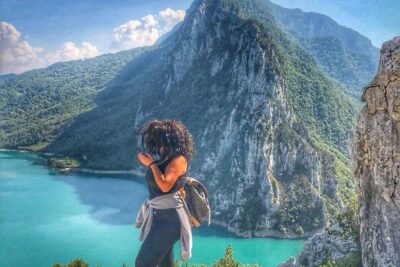
Hike Gamti Mountain with Bovilla lake view & canyon- From Tirana
Read our review →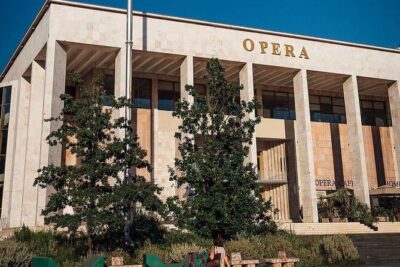
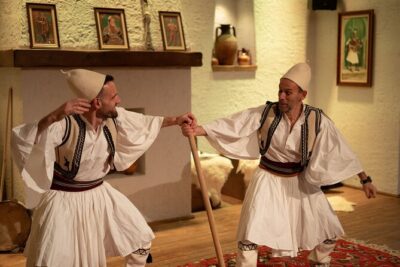
Albanian Night Show: Traditional Music, Dance & Dinner in Tirana
Read our review →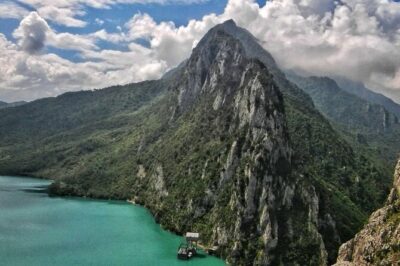
Cooking Classes and Traditional food tasting in Tirana
Read our review →
Best of Local Food & City Tour of Tirana – Food & Drinks Included
Read our review →Browse the lists this tour appears in