
Reviewed · FULL-DAY
Best of Berat and Durres Full Day Tour
Durres gives you Roman ruins beside a working Adriatic city, while Berat brings white Ottoman houses, a hilltop castle, and some of Albania’s best religious art. I like the way this tour puts two very different cities in one day. You get seaside air in the morning, then Berat’s steep lanes and old stone buildings later on.
I also like the small maximum group of 12 and the flexible pickup anywhere inside Tirana. Guides Ilir and Iliri have been praised for making the long drive lively with history and conversation. The catch is the schedule: eight to nine hours is a lot of ground, and winter’s short daylight can make the final stops feel rushed.
Key points to know before booking
- Two major Albanian sights in one day: Compare Roman Durres with Ottoman and Byzantine Berat.
- A full day from Tirana: Travel time is already included, so expect a busy schedule rather than a slow visit.
- A small group format: The vehicle holds no more than 12 people, with a private tour option available.
- Strong guide potential: Ilir and Iliri are praised for clear historical explanations and good company.
- Many included monument entries: The amphitheatre, Berat Castle, Onufri Museum, King Mosque, and Halveti Tekke are included.
- Plan for your own meals: Food, drinks, tips, personal spending, and optional extras cost more.
Why Durres and Berat make a useful pair
This tour works because the two cities show different chapters of Albania. Durres faces the Adriatic and grew from the ancient Greek settlement of Epidamnos, later known as Dyrrachium. Romans used it as the western start of the Via Egnatia, the road that crossed the Balkans toward Constantinople.
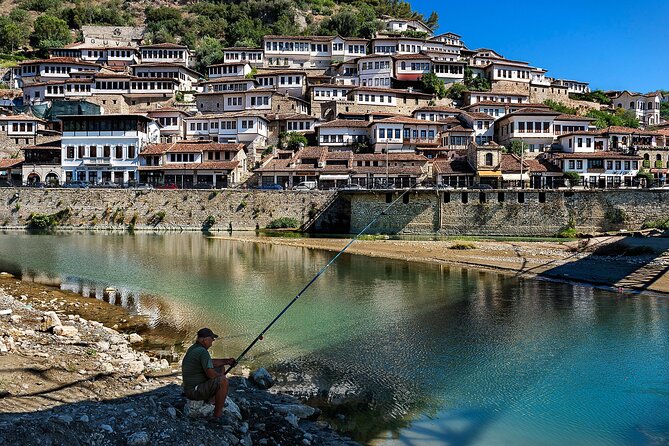
Berat feels different at once. Its hilltop fortress, old churches, Ottoman mosques, and white houses along the Osumi River create a more intimate visit. You are not simply seeing ruins. You are moving through a living town shaped by Roman, Byzantine, Ottoman, and modern Albanian life.
At $142.02 per person, the value depends on how much you want to cover in one day. The price includes transport from Tirana, a driver with historical knowledge, a licensed guide, bottled water, and several entry tickets. For someone with limited time in Albania, that saves the trouble of arranging two separate day trips.
The tradeoff is pace. Durres and Berat each deserve more than a quick look, yet this outing gives you a broad introduction rather than a leisurely stay. I would choose it for a first visit or a short stop in Tirana, not for someone who wants long café breaks and unplanned wandering.
A few more Berat days to weigh up
- From Tirana: Berat UNESCO & Belshi Lake Full-Day Tour
★ 5.0 · 118 reviews - Berat Full Day Trip from Tirana
★ 5.0 · 103 reviews - Full Day Berat Tour from Tirana
★ 5.0 · 8 reviews
Starting from Tirana at 9:00 am
Pickup begins at 9:00 am, and you can arrange a meeting point anywhere inside Tirana after booking. That is more useful than a fixed departure point, especially if your accommodation is away from the city center.
Travel time is included in the stated eight to nine hours. The vehicle is air-conditioned, and the group size is capped at 12. A private option is also available, which may be worth considering if you want more control over stops or are traveling as a couple or family.
The operator charges extra for pickup outside Tirana. Extra services also cost more and are paid directly to the guide by cash, PayPal, or bank transfer. Clarify those costs before departure so the advertised price does not come as a surprise.
One practical point deserves attention. Bottled water is listed as included, but one booking account reported not receiving water even after asking. I would bring your own bottle anyway. The same advice applies to bathroom planning, since one account described limited scheduled breaks.
Durres: Roman power beside the Adriatic
The first stop is Durres, Albania’s major port city and one of its oldest urban centers. Greek colonists founded the settlement around the 7th century BC, and its position on the Adriatic made it important for trade, military movement, and travel across the Balkans.
The city tour covers the Old Town, Byzantine walls, Roman baths, the modern center, the archaeological museum, and the Venetian Tower. The listed overview allows about 30 minutes for this broad introduction, so expect an orientation rather than a long museum visit at every site.
The Byzantine forum is especially interesting because it sits amid modern Durres. Built around the end of the 6th century during the reign of Emperor Anastasius, the circular paved area likely served formal public purposes. Its survival gives you a clear sense of how an old civic center can remain part of a modern city without being isolated behind a large archaeological park.
The Roman baths and city walls add useful context. Durres was not just a port with a famous arena. It was a planned city with public buildings, defenses, markets, and religious spaces. The archaeological museum is noted for its focus on urban planning and antique discoveries, though the schedule means your time inside may be limited.
The Roman Amphitheatre and Venetian Tower
The Roman Amphitheatre is the main Durres sight. Construction began under Emperor Trajan in the 2nd century AD, and the arena once held as many as 20,000 people. It is regarded as the largest Roman amphitheatre built in the Balkan Peninsula.
Earthquakes damaged it in the 6th and 10th centuries, and the structure was only discovered in 1966. That late discovery helps explain why parts of the amphitheatre sit so close to ordinary city streets. You can look at the stone seating and curved walls while modern Durres carries on around them.
The amphitheatre is on Albania’s tentative UNESCO World Heritage list, and entry is included. The scheduled visit is about 30 minutes, enough to see the main remains and hear the story, but not enough for a slow archaeological study.
The Venetian Tower forms another useful piece of the city’s defense system. It was built over an earlier Byzantine tower around the 15th century and fitted with cannons to guard the coast. The wider fortress began under Byzantine Emperor Anastasius I, who was born in ancient Durres.
The tower was renovated in 2023 and now houses Albania’s first Heritage Interpretation Center. Digital and multimedia displays explain the city’s past in a more modern way. This is a good stop for you if you enjoy context and visual displays, though the short schedule may limit how much time you have with the technology.
A completely different kind of day from the same base:
- Berat city UNESCO tour, the Castle & Belshi lake- From Tirana
★ 5.0 · 804 reviews - Berat Rafting, Kayaking & River Tubing – Osumi Canyons
★ 5.0 · 336 reviews - Berat-Durres and Belsh Lake, day tour from Tirana
★ 4.5 · 274 reviews - Berat Tour Osumi Canyons Exploration Lunch Transfer
★ 4.5 · 212 reviews
A short Adriatic pause at Durres Beach
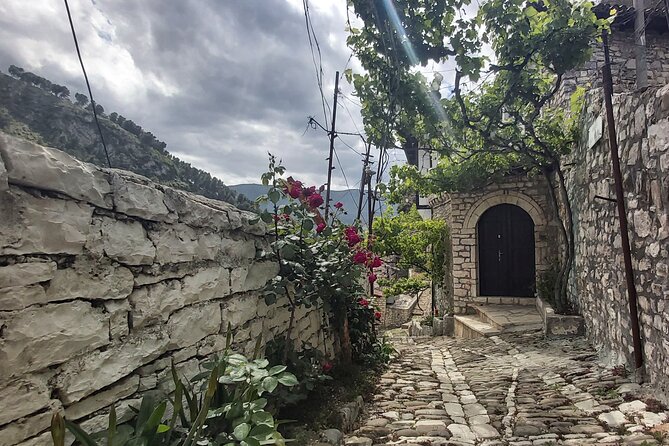
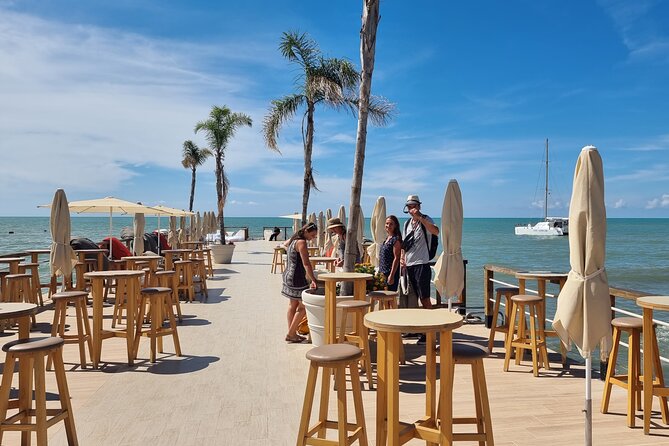
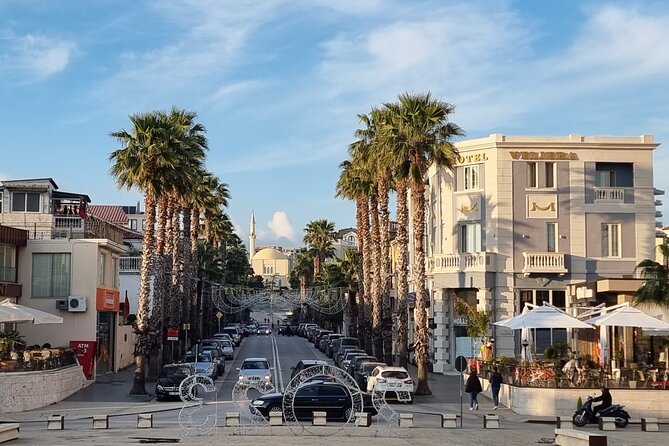
The beach promenade provides a change of rhythm after the ruins. You have about 30 minutes to stroll along the Adriatic, look at the seafront, or sit at a café among the shops and restaurants.
Do not picture this as a full beach day. It is a brief seaside break, useful for seeing Durres as a modern resort city rather than only an archaeological site. If you want a swim, an extended meal, or a long walk, the schedule probably will not allow it.
This stop also gives you a chance to buy a drink or snack, since meals and drinks are not included. Keep the pause short if you want enough time for Berat’s castle and museums later.
Berat Castle: a hilltop quarter, not just a ruin
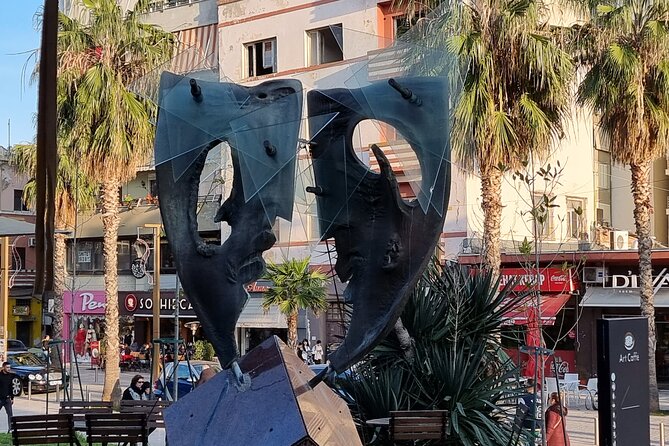
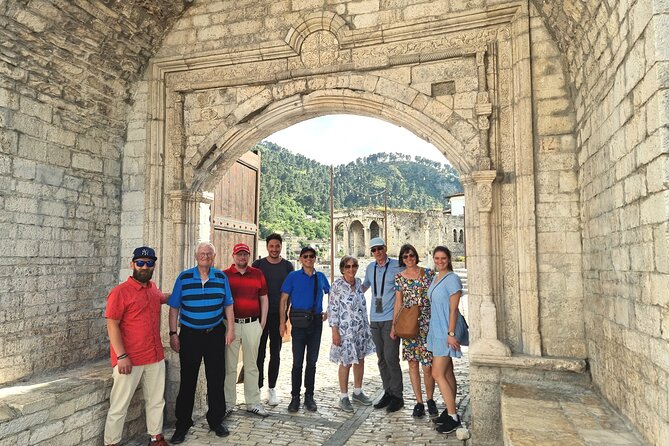
After Durres, the tour continues to Berat. The castle sits on a hill above town, but it is more than crumbling defensive walls. Inside is Kala, a whitewashed neighborhood of cobbled lanes, old houses, churches, and courtyards.
The 40-minute visit introduces you to the quarter’s unusual character. You may turn down a narrow lane and find yourself beside a private courtyard or an old church. The area still feels like a neighborhood rather than a single preserved monument.
You should expect some uphill walking and uneven stone surfaces here. The castle visit is short, so focus on the atmosphere, the views, and the way daily life fits inside an old fortress. The hilltop position also helps explain Berat’s defensive importance.
The castle area is one of the strongest parts of the day because it brings together architecture, religion, and ordinary life. You are not only looking at walls. You are walking through a settlement that has continued to function.
Onufri Museum and Berat’s painted churches
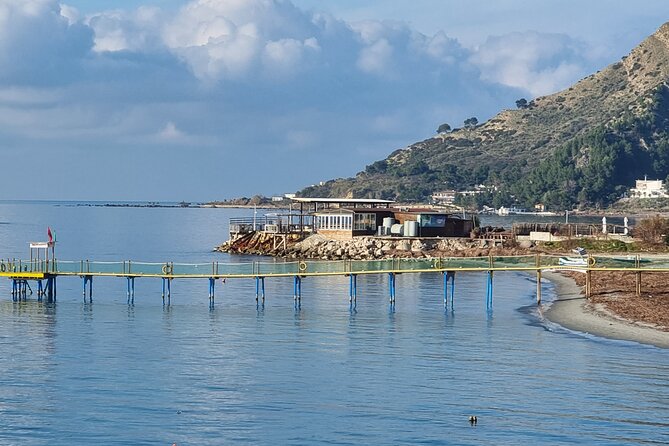
Inside Kala, the National Iconographic Museum Onufri occupies the Church of the Dormition of St Mary. The church dates from 1797 and was built over a chapel from the 10th century.
The museum holds around 200 icons, artworks, and liturgical objects dating from the 14th through the 20th centuries. The collection includes works linked to Albanian painters Onufri, his son Nikolla, and Onufër the Cypriot.
The church’s gilded 19th-century iconostasis is a major reason to pay attention inside. The 16th-century religious paintings offer a look at Albania’s Orthodox artistic tradition, where color, expression, and detailed figures carry much of the meaning.
You have about 40 minutes here. That is enough to appreciate the central pieces, but you will need to keep moving if you want to stay on schedule. The museum is included, which improves the tour’s value, especially for anyone interested in church art rather than only outdoor monuments.
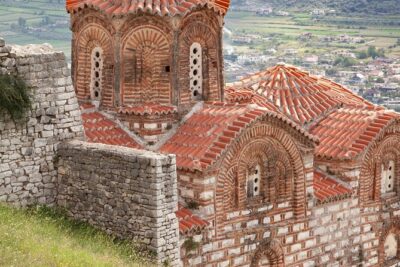
The nearby Byzantine church is described as one of Berat’s best-preserved examples. Its construction dates to the late 13th century, and an inscription on one of the gates names Andronicus Paleologus, the city’s governor. This short visit adds a quieter architectural stop after the museum.
Ottoman Berat: mosques, Mangalem, and the King Mosque
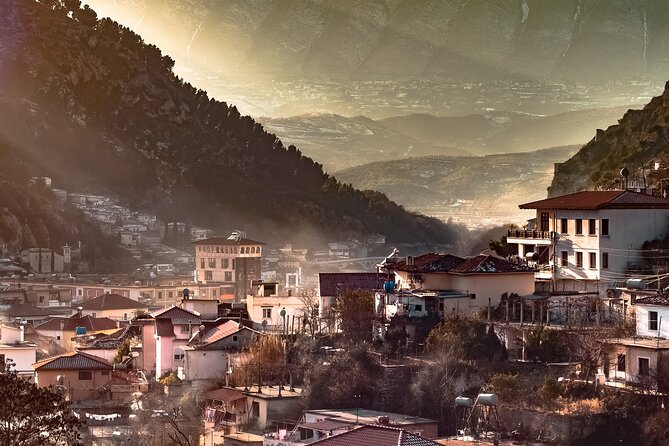
Berat’s Ottoman story comes into focus at the old mosque associated with the conquest of the city. It was probably built in the 15th century, shortly after Berat came under Ottoman control in 1417. Older records date to 1431 or 1432, and its early names included Mosque of the Ruler and Mosque of Conquest.
The King Mosque, also called the Sultan’s Mosque or Sultan Bayezid Mosque, was built in the 15th century under Bayezid II. It was rebuilt in the 19th century to prevent collapse and remains an active place of worship.
The visit lasts about 10 minutes, so look closely at the women’s gallery and its painted wooden ceiling. Small details like this are easy to miss if you only view the mosque from outside.
The Halveti Tekke is another brief but distinctive stop. This was a place of worship for Muslim dervishes, or mystics. The square building dates to the 15th century and was rebuilt by Ahmet Kurt Pasha in 1782.
Inside, you can see the prayer hall, an outer portico, and columns said to come from the ancient city of Apolonia. A balcony was designed to improve sound during religious rituals. The visit takes around 10 minutes, but it adds an important layer to Berat’s religious life.
Mangalem and the City of 1000 Windows
Mangalem lies north of the Osumi River and below Kala. Its white stone houses, red tile roofs, wooden doors, and rows of windows climb the hillside in a distinctive pattern.
The nickname City of 1000 Windows comes from the many large, symmetrical windows built into the homes. You have about 30 minutes to walk through the quarter and take in the view across the river.
This is one of the best places to understand Berat visually. The houses are not arranged as a museum display. They form a real neighborhood, with flowers, doors, lanes, and homes packed closely along the slope.
The short visit means you will not have time to explore every lane. Still, Mangalem gives you the image most associated with Berat, and it works well after the castle because you can see how the town extends down from the hill.
Gorica Bridge and the final river view
The day ends at Gorica Bridge, one of Berat’s most recognizable structures. The Ottoman bridge crosses the Osumi River for about 130 meters and rises 10 meters above the riverbed. Seven arches support the span, with wooden railings and small openings that give the structure a playful appearance.
The bridge connects Berat with the neighborhood of the same name. Its gradual curve makes it pleasant to photograph from the riverbanks and to cross on foot.
You have about 30 minutes here. It is a fitting final stop because it brings together Berat’s two sides, the river, the old neighborhoods, and the town’s Ottoman design. After a day of churches, mosques, ruins, and castle lanes, the open view gives you a little breathing room.
Price, pace, and who will enjoy this day
The $142.02 price is reasonable if you value door-to-door transport, included entries, a guide, and the chance to see two major destinations without arranging separate transport. It is less attractive if you are already comfortable using public transport or hiring local guides in each city.
The strongest value comes from the guide. Ilir and Iliri have been praised for explaining history clearly and keeping conversation interesting during the drive. That matters because the route includes long stretches between stops, and good interpretation helps connect the Roman, Byzantine, and Ottoman periods.
The full schedule also has limits. One account described the day as lacking enough bathroom stops, and another raised a concern about water not being provided despite it being listed as included. Bring water, use facilities when available, and ask the guide about the next break.
I would choose this tour for first-time visitors to Albania, couples, small groups, and anyone staying in Tirana who wants a broad introduction. It also suits people who enjoy history but do not want to organize several transport connections.
I would hesitate if you need a slow pace, have difficulty with uphill walking, or want a long beach visit. Berat Castle and Mangalem involve old streets and slopes, while the timetable leaves little space for wandering beyond the planned stops.
Should you book the Berat and Durres day tour?
Book it if you want a focused introduction to Albania’s coast and interior in one day. The contrast is excellent: Roman Durres in the morning, then the churches, mosques, castle lanes, and white hillside homes of Berat.
Before paying, confirm your pickup point, ask about bottled water, and check whether the date gives you enough daylight. The tour needs good weather, and cancellations caused by poor weather or an unmet minimum group size can lead to a new date, another experience, or a full refund. You can cancel for a full refund up to 24 hours before the start time.
For a short Tirana stay, this is a practical choice with strong historical content. For a relaxed holiday, split Durres and Berat into separate days if you can.
FAQ
Where does the tour start?
The tour starts with pickup in Tirana at 9:00 am. The operator can collect you anywhere inside the city after you communicate the meeting point.
How long does the tour last?
The tour lasts approximately eight to nine hours. Travel time between Tirana, Durres, and Berat is included in that duration.
What is the maximum group size?
The maximum group size is 12 travelers. A private tour option is also available.
Is pickup outside Tirana included?
No. Pickup outside Tirana costs extra, with payment made directly to the guide by cash, PayPal, or bank transfer.
Are meals included?
No. Meals and drinks are not included. Personal expenses, tips, gratuities, and optional activities also cost extra.
Which admissions are included?
Admission to the Durres Amphitheatre, Berat Castle, the National Iconographic Museum Onufri, the King Mosque, and the Halveti Tekke is included.
Is bottled water provided?
Bottled water is listed among the included services. Since one booking account reported not receiving water, bringing your own bottle is a sensible precaution.
What happens if I need to cancel?
You can cancel up to 24 hours before the experience for a full refund. Changes or cancellations made less than 24 hours before the start time are not accepted for a refund.
Just added around Berat
- Berat Cooking Class- Traditional Albanian Cooking Class★ 5.0 · 9 reviews
- From Tirana Wine Tasting & Food tour in Berat★ 5.0 · 5 reviews
- Day Tour of Berat and Ancient City of Apollonia★ 5.0 · 4 reviews
- Berat Guided Trip to Mount Tomorr and Bogove Waterfall★ 5.0 · 15 reviews
- TOMOR MOUNTAIN HIKING from Berat by 1001 Albanian Adventures★ 5.0 · 8 reviews
- SOTIRA WATERFALL HIKING/TREKKING from Berat by 1001 Albanian Adventures★ 5.0 · 3 reviews
- Private Full Day Tour from Tirana to Berat and Durres★ 5.0 · 7 reviews
- Osumi Canyons and Bogova Waterfall Tour★ 5.0 · 19 reviews
Full-Day, compared.
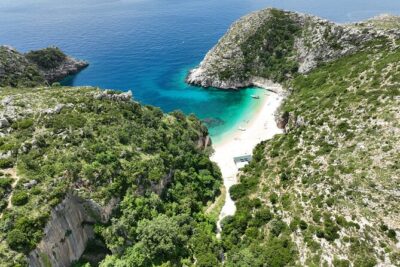
Blue Cave & Grama Bay Full Day Guided Boat Tour
Read our review →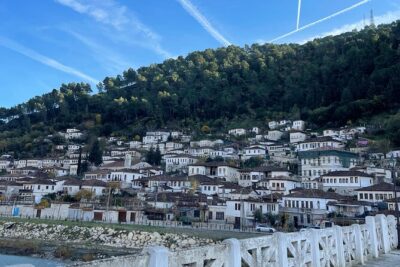
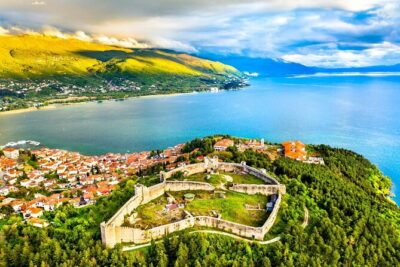
Ohrid – North Macedonia Full Day Tour from Tirana & Durres/Golem
Read our review →
From Tirana/Durres/Golem: Prizren and Prishtina Full-Day Tour
Read our review →
Full Day Tour from Tirana to Prishtina and Prizren
Read our review →
Private Full-Day Historical Day Tour in North Macedonia and Albania
Read our review →
Full-Day Tour of Albania’s Bunkers and Beaches, from Tirana
Read our review →Browse the lists this tour appears in