
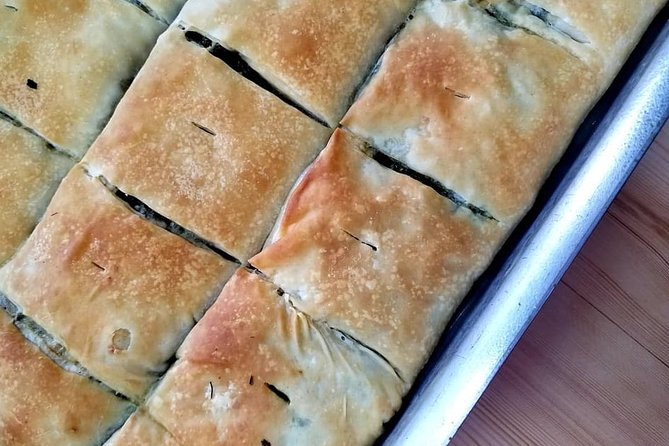
Reviewed · COOKING CLASSES
Cooking Class
Gjirokaster’s food makes the city easier to understand, and this private class puts you right into that tradition. You prepare qifqi rice balls, lamb pasta called OSA, and hasude, a walnut dessert, then sit down to eat your work.
I like the small private format, which gives you hands-on attention rather than a seat in a crowded demonstration. I also like the family recipes, mountain spices, teas, folklore, and written instructions you can take home. The main caution is organization: the meeting address has caused confusion, and some bookings were not known to the host when participants arrived.
Key points to know before booking
- Three traditional dishes: Prepare qifqi, OSA pasta with lamb, and hasude dessert when the full session runs as planned.
- Private instruction: Only your group participates, so you can ask questions and work directly with the cook.
- Bazaar location: The meeting point is in Gjirokaster’s medieval bazaar, near public transportation.
- A meal at the end: You eat the dishes you have prepared, along with traditional appetizers and drinks.
- Family cooking traditions: The class includes stories, local customs, mountain herbs, spices, and a family secret ingredient.
- Allow for some flexibility: The experience is advertised at about two hours, but some sessions have lasted closer to one hour or required a return visit.
Cooking Gjirokaster’s oldest recipes
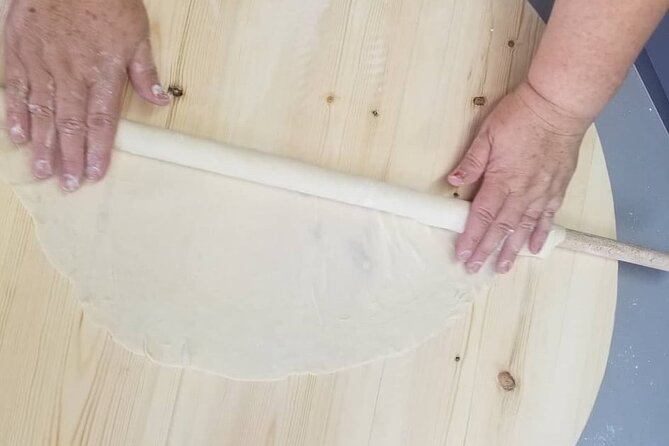
You cannot get far in Gjirokaster without encountering its food. The city’s cooking is closely tied to household tradition, and this class focuses on recipes passed down through generations rather than on restaurant-style presentation.
The aim is simple: you learn by doing. You handle the ingredients, follow the cooking steps, and eat the finished dishes. That makes the experience useful for anyone who wants more than a plate of local food. You leave with recipes and the dishes you prepared, at least in written form and often as practical ideas you can repeat at home.
The full menu includes a starter, main course, and dessert:
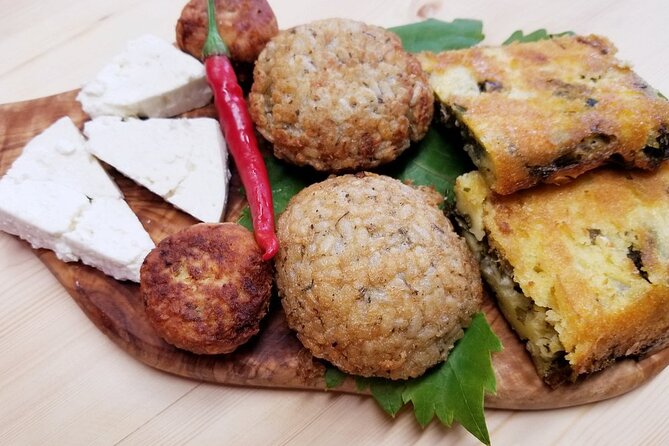
- Qifqi, seasoned rice balls
- Traditional OSA pasta with lamb meat
- Hasude, made with starch, butter, and walnuts
The class also includes traditional appetizers, local drinks, and an introduction to mountain spices and teas. Those small additions matter. Food becomes easier to remember when you understand how ingredients fit into daily life, family habits, and local customs.
More cooking classes in Gjirokaster:
- Vegetarian Cooking Class @Teta Marjeta
★ 5.0 · 11 reviews - Cooking Classes and Traditional food tasting in Tirana
★ 5.0 · 282 reviews - Traditional Albanian Cooking Class in Tirana with Raki Tasting
★ 5.0 · 125 reviews
Meeting in the medieval bazaar
The class begins at Rruga Gjin Shpata in Gjirokaster, in or near the medieval bazaar. The shopfront is described as easy to recognize, with open doors and a welcoming atmosphere, but you should not rely on the address alone.
One participant found that the address saved with the booking was incorrect and located the activity at Edua restaurant instead. Another arrived to find that the host had no record of the booking. In both cases, the cooking eventually happened, but the delay affected the day.
My practical advice is to contact Edua.gjirokaster before you go. Confirm the exact location, start time, and that your reservation is recorded. This is especially important if you have a bus, taxi, or dinner reservation afterward. The experience is private, so a simple communication problem can matter more than it would in a large group tour.
The bazaar setting is a good fit for the class. You can reach it on foot from the historic center, and public transportation is nearby. The activity ends back at the meeting point, so you do not need to arrange a separate ride after eating.
Making qifqi, Gjirokaster’s rice balls
Qifqi is one of the most distinctive dishes on the menu. These small rice balls are associated with Gjirokaster and make a fitting first lesson because they are both local and approachable.
You learn the preparation step by step, including how the mixture is seasoned and shaped. The class description emphasizes traditional spices, and this is where that part of the experience becomes useful. You are not simply given a finished snack. You get a sense of how seasoning changes the character of a basic ingredient.
The qifqi is served as the starter. It gives you something to eat early in the class and lets you compare the finished dish with the work that went into it. If you enjoy food that can be repeated in your own kitchen, this is one of the more practical parts of the session.
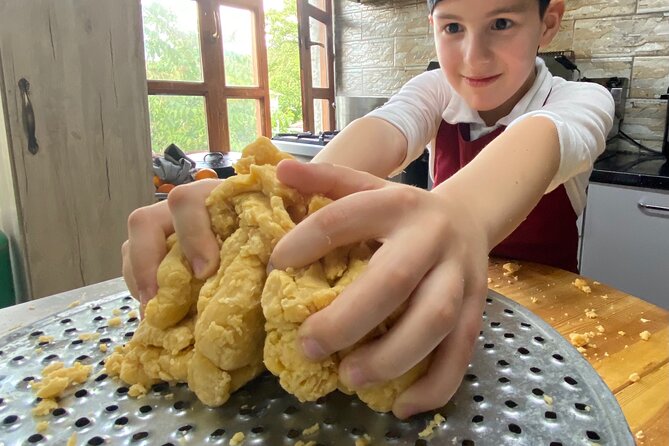
The cooking itself is described as hands-on rather than technical. You are guided through the process, but you should expect to participate rather than watch a chef do everything. That makes this a good choice for beginners, including people who are more interested in local culture than in advanced cooking skills.
Preparing OSA pasta with lamb
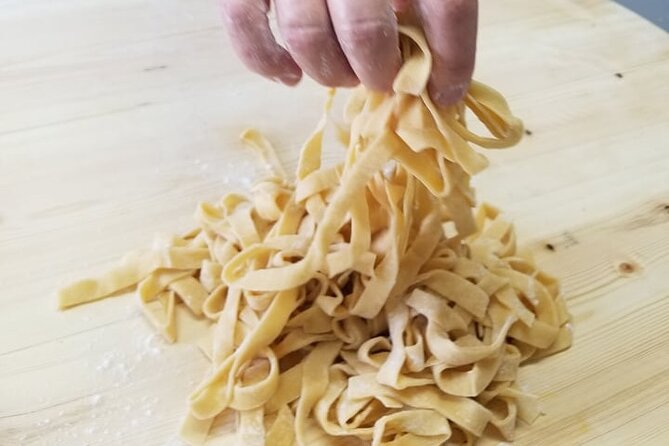
The main course is traditional pasta called OSA, served with lamb meat. This is the heart of the class for many people because it involves making an artisanal pasta rather than simply assembling ingredients.
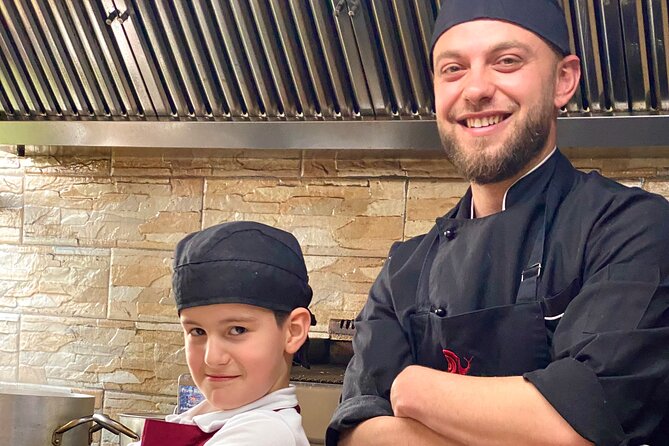
The class teaches the method in a lead-and-follow style. You watch the cook, copy the technique, and receive help along the way. One session was led by a cook who did not speak English, with a family member translating. That did not prevent the cooking, but it is worth knowing that English communication may sometimes come through a translator rather than directly from the person preparing the food.
The family setting is part of the charm, but it also means the class may feel less polished than a professional culinary school. Instructions can be informal. You may need to pay attention, ask questions clearly, and wait for translation. If you want a slick demonstration with exact measurements and a printed workbook, this is not that kind of class.
For most people, the informal method is also what makes the activity personal. You learn the movements by seeing them, then try them yourself. The OSA pasta is described as tasty and interesting, and it is the dish most likely to make the class feel like a real cooking lesson rather than a food tasting.
More hands on workshops in Gjirokaster:
- Berat Cooking Class- Traditional Albanian Cooking Class /By Vato
★ 5.0 · 120 reviews - Savor Albanian Cuisine Cooking Class with Mama Nina Berat Castle
★ 5.0 · 55 reviews - Cooking Class in Berat Slow Food Community
★ 5.0 · 34 reviews - Paint and Wine – Authentic Art Workshop in Tirana
★ 4.5 · 27 reviews
Finishing with hasude and a shared meal
Hasude brings the class to a sweet finish. The dessert uses starch, butter, and walnuts, and it is included as part of the traditional menu.
Dessert is not an afterthought here. It gives you a third recipe and shows how local cooking uses a short list of everyday ingredients. The class description says you will learn two typical Gjirokaster recipes and a dessert, so the full experience should include all three courses.
After cooking, you eat what you have made. This is one of the strongest reasons to book the activity. You can see the result of your work immediately, and the meal gives the class a natural ending instead of leaving you to find lunch elsewhere.
Drinks and traditional appetizers are also included in the experience description. One important detail is that a separate charge for wine and beer was reported in one case, despite drinks being understood as included. To avoid an awkward moment, ask in advance which drinks are covered and which cost extra.
Local stories, herbs, and the family touch
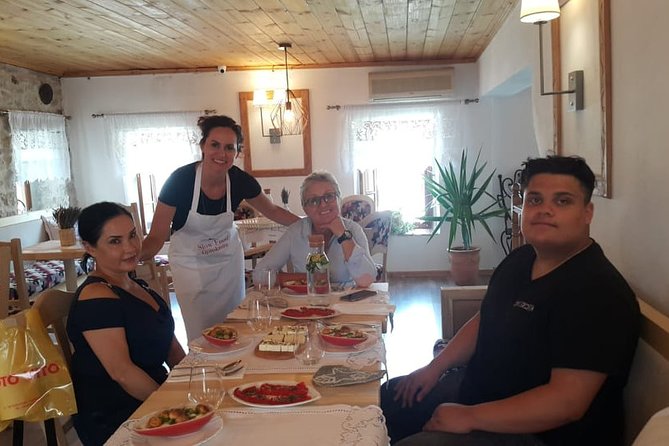
The food is only half of the activity. The host also introduces you to mountain spices and teas, including their traditional uses and claimed benefits. You will hear local history and folklore as you cook, which helps explain why these recipes remain part of Gjirokaster’s identity.
The mention of a secret ingredient inherited through the family gives the class a personal angle. Do not expect a formal lecture on Albanian cuisine. Instead, you are likely to pick up small pieces of information while chopping, mixing, shaping, and waiting for the food to cook.
That relaxed setting suits the private format. You can ask about a spice, a recipe, or a local custom without worrying about holding up a large group. It is also a good activity for couples, families, and small groups who prefer shared work over a passive sightseeing stop.
At the same time, the experience depends on the people present that day. One cook may have limited English, and family members may translate. The friendly welcome and personal contact are clear strengths, but the instruction may not follow a strict script.
Is two hours enough?
The published duration is about two hours. That should be enough for a compact class, a meal, and conversation when everything begins on time and all three dishes are prepared.
Actual timing may vary. One session lasted about an hour, while another participant was asked to return four hours later because the host had not been prepared for the booking. That is not a reason to reject the experience, but it is a reason to protect your schedule.
I would book this on a day when you have room to adjust your plans. Avoid placing it between two fixed bus departures or before an important reservation. If you are visiting Gjirokaster at a relaxed pace, the timing is much less of a concern.
The class is offered in English, but direct communication may not always be in English. Translation by a family member can fill the gap, though you should allow a little patience when instructions are being explained.
The $54.19 price and what you receive
At $54.19 per person, this is not priced like an ordinary Albanian restaurant meal. You are paying for private instruction, ingredients, a meal, local conversation, and the chance to make several traditional recipes.
The value depends on how you use the class. If you only want to eat qifqi and pasta, you can probably spend less at a restaurant. If you want a personal activity, written recipes, and a meal connected to the city’s family traditions, the price is easier to justify.
The private format is the key value point. Only your group takes part, so you do not share the cook’s attention with a busload of people. For a couple or small group, that can make the cost feel reasonable. For one person, the per-person rate may feel high compared with local food prices.
The inclusion of drinks needs clarification. The experience mentions various drinks, but one participant was charged separately for wine and beer. Ask before ordering alcohol. That small step can prevent confusion at the end.
Who will enjoy this class most?
I would recommend it to you if you like food, local customs, and informal contact with a family-run business. It is especially suitable if you want to learn a few dishes that are not standard international cooking-school fare.
It also works well for beginners. The recipes are described as manageable, and the teaching is based on demonstration and practice. You do not need advanced kitchen skills to take part.
Families may enjoy the short duration and the reward of eating the finished food. Couples and friends get a shared activity that feels more personal than another restaurant meal. People with strict schedules, however, should think twice unless the host confirms the arrangement beforehand.
This is less suitable if you expect a highly polished culinary production, precise English instruction at every step, or a guaranteed two-hour program with no changes. The warmth is real, but the organization can be uneven.
Booking, cancellation, and practical details
You receive confirmation at booking unless you reserve within one day of the activity. Last-minute reservations are confirmed as soon as possible, subject to availability.
Free cancellation is available if you cancel at least 24 hours before the start time. Cancellations or changes made less than 24 hours ahead are not refunded or accepted, and the cut-off uses local time.
The activity allows service animals and is near public transportation. It is a private experience, and the endpoint is the same as the meeting point.
Before setting out, send a message to confirm:
- The exact meeting point
- The start time
- That the host has your reservation
- Whether all three dishes will be prepared
- Which drinks are included
Those questions take little effort and address the main problems that have occurred.
Should you book the Gjirokaster cooking class?
Book it if you want to connect Gjirokaster with its food and prefer a hands-on family experience to a formal cooking school. The qifqi, OSA pasta, and hasude give you a useful range of local dishes, and eating your own meal is a satisfying finish.
I would be more cautious if your day is tightly scheduled or if you need flawless organization. Confirm the location and reservation directly, then leave extra time around the class.
With those precautions, this is a worthwhile way to spend part of your visit. The strongest parts are the private attention, the personal family setting, and the chance to take home recipes you can actually try again.
FAQ
How long does the cooking class last?
The experience is advertised at approximately two hours. Some sessions have lasted closer to one hour, so the actual length can vary.
What dishes will I prepare?
The sample menu includes qifqi rice balls, traditional OSA pasta with lamb meat, and hasude dessert made with starch, butter, and walnuts.
Where does the class meet?
The starting point is Rruga Gjin Shpata in Gjirokastër, Albania, in the medieval bazaar area. You should confirm the exact location with Edua.gjirokaster before arriving.
Is the class private?
Yes. Only your group participates in the activity.
Is the experience offered in English?
Yes, the experience is offered in English. In some sessions, a family member may translate for a cook who does not speak English directly.
Can I cancel for a full refund?
Yes, if you cancel at least 24 hours before the scheduled start time. Cancellations made less than 24 hours in advance are not refunded.
Just added around Gjirokaster
- Day Tour of Gjirokastra & Blue Eye from Tirana or Durres★ 5.0 · 10 reviews
- Private Day Trip to Gjirokastra from Tirana w/Lunch★ 5.0 · 6 reviews
- Tirana: Day Tour of Gjirokastër and Blue Eye★ 4.5 · 13 reviews
- Private Day Tour of Gjirokastra from Tirana★ 5.0 · 10 reviews
- Private Tour from Tirana, Gjirokastër , Saranda and South Riviera★ 5.0 · 10 reviews
- Visit the City of Gjirokastra★ 4.5 · 12 reviews
- Visit Blue Eye, Gjirokastra & Lekursi Castle★ 5.0 · 6 reviews
- Blue Eye and Gjirokaster, Half Day Nature & Historical Tour★ 5.0 · 12 reviews
Cooking Classes, compared.
Cooking Classes and Traditional food tasting in Tirana
Read our review →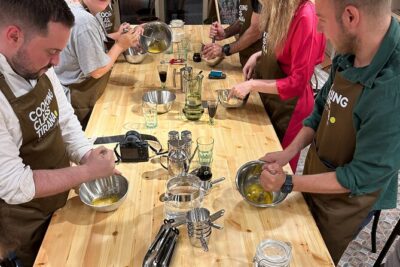
Traditional Albanian Cooking Class in Tirana with Raki Tasting
Read our review →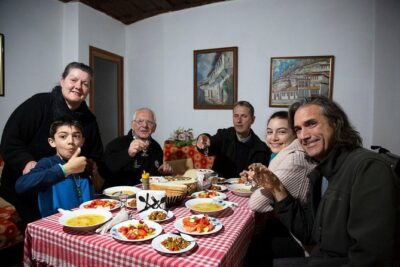
Berat Cooking Class- Traditional Albanian Cooking Class /By Vato
Read our review →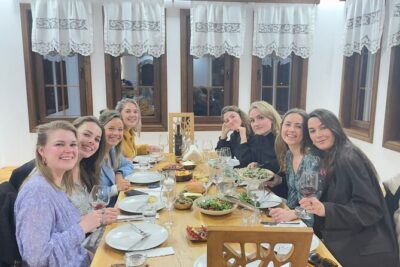
Savor Albanian Cuisine Cooking Class with Mama Nina Berat Castle
Read our review →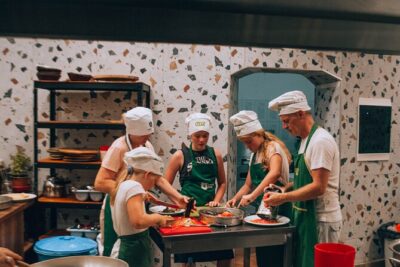
Farm-to-Table Cooking Class with Local Family by 1001 AlbAdv
Read our review →Browse the lists this tour appears in