
Reviewed · WALKING TOURS
Gjirokaster walking Tour The Old Baazar, Cfake, Dunavat, Ali Pasha Bridge
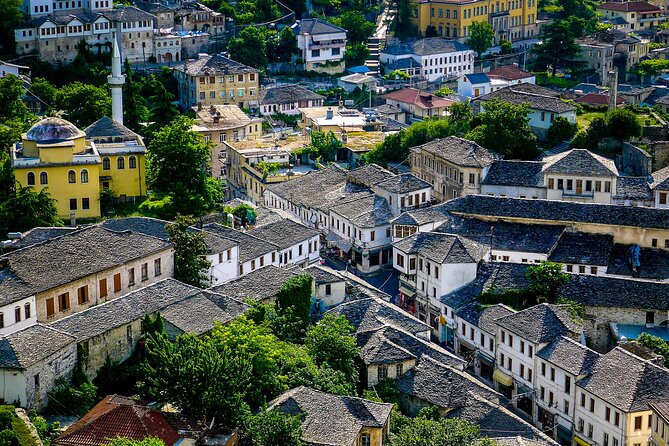
Gjirokaster’s best stories are often found below the castle, where old stone neighborhoods climb into the hills and the streets grow quieter. This three-hour walk leads from Çerçiz Topulli Square through the Old Bazaar, Cfaka, and Dunavat to Ali Pasha Bridge, following a side of town that many visitors miss.
I like the local perspective, especially when the guide is Besi, whose warm, cultured approach brings the town’s past and present together. I also like the mix of cobblestones, first-category historic houses, a Bektashi tekke, open hills, and sheep. The main consideration is the walking: uneven stone streets and a route beyond the compact center may feel demanding if you are not comfortable on foot.
Key points to know before booking
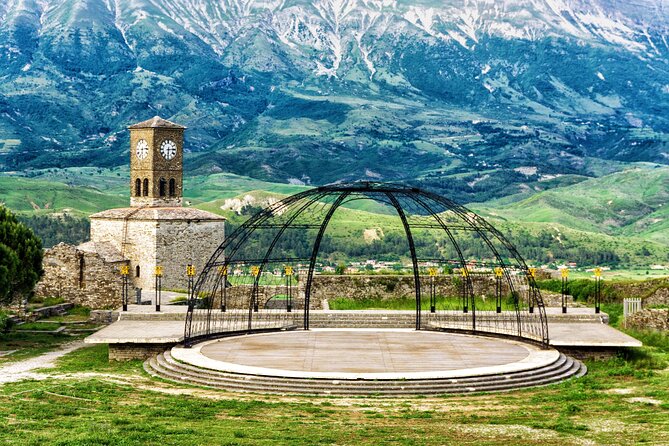
- The route leaves the castle zone: You walk beyond the most visited sights and into older residential neighborhoods.
- Three historic areas are included: The Old Bazaar, Cfaka, and Dunavat each offer a different view of Gjirokaster.
- Ali Pasha Bridge is the goal: The route finishes at this striking stone bridge before returning to the starting point.
- A guide makes the difference: Besi is praised for his warmth, local knowledge, and clear explanations of the town’s past.
- The group stays small: A maximum of 15 people allows a more personal walk than a large city tour.
- The price is modest: At $18.08 per person, the cost is reasonable for roughly three hours with a guide.
Why this walk gets beyond Gjirokaster’s postcard center
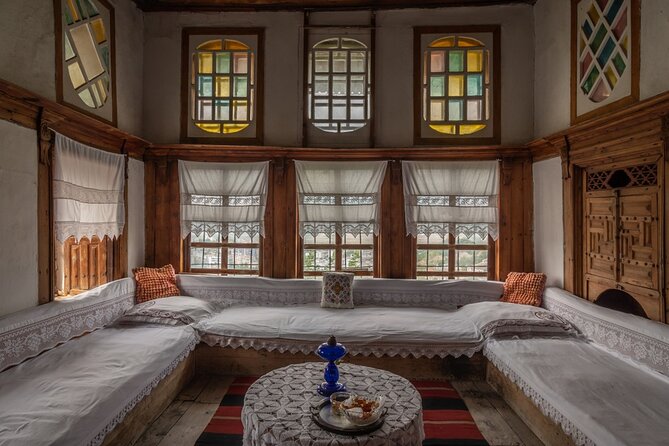
Gjirokaster is famous for its castle, steep lanes, and pale stone roofs. Those sights deserve your time, but the town’s character becomes clearer when you leave the main square and walk into the neighborhoods beneath the fortress walls.
This route begins in the center at Çerçiz Topulli Square, then moves toward the Old Bazaar. The name can set the wrong expectation. This is not mainly a shopping market today. It is an old neighborhood, once tied to commerce, with cobbled lanes and some of the city’s oldest homes.
I like that distinction. You are not being steered toward a row of souvenir stalls and called it local life. You are walking through a lived-in part of Gjirokaster, where the buildings and street plan tell much of the story.
The route then continues across the Zerzebili Bridge toward Cfaka, another ancient quarter. From there, it reaches Dunavat and the Ali Pasha Bridge. The walk combines buildings, religious heritage, countryside views, and local stories rather than treating the city as one large open-air museum.
More Walking Tours in Gjirokaster:
- Walking Tour Baazar – The Argjiro Castle – Zekate house
★ 4.5 · 18 reviews - Walking Tour “The Old Bazaar, Cfake, Dunavat, Ali Pasha Bridge”
★ 5.0 · 10 reviews - Gjirokastra Private Half-Day Walking Tour
★ 5.0 · 3 reviews
Starting at Çerçiz Topulli Square
You meet your guide at Çerçiz Topulli Square, a central and practical starting point in the old town. The activity returns to this same meeting point at the end, so you do not need to arrange transport back from a remote finish.
The tour is designed for about three hours. That gives the guide time to explain what you are seeing instead of rushing you from one photo stop to the next. The stated group limit is 15 people, though a smaller group can make it easier to ask questions and keep a comfortable pace.
A minimum of two people is required for the tour to operate. Keep that rule in mind when booking alone, since one person cannot take the walk by himself or herself under the stated conditions.
The route begins with an immediate change of mood. Çerçiz Topulli Square is the urban starting point, but the old lanes soon lead you toward the castle walls and the quieter streets below them. This is a useful way to get your bearings: the castle is not an isolated monument, but part of a larger hillside town.
The Old Bazaar, a neighborhood rather than a market
The first section leads to the Old Bazaar. Despite its name, you should not expect a full working bazaar with rows of merchants. The attraction here is the neighborhood itself, including its stone paving, old homes, and position beneath the castle.
The cobblestones are part of the experience, but they also affect your footing. Wear shoes with a firm sole. This is not a polished promenade, and the charm comes partly from the fact that the street surface has kept its old character.
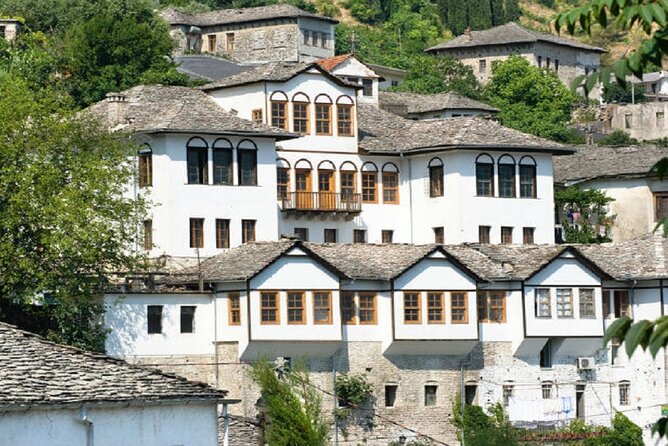
The houses are the key sight. Gjirokaster is known for its distinctive stone construction, and the Old Bazaar gives you a close look at that tradition at street level. A guide can help you read details that are easy to pass without context, such as the age of a building, its place in the neighborhood, or the way the homes fit against the slope.
The included stop is listed as free admission. Your payment covers the guided experience rather than an entrance ticket to this section. That keeps the cost low, though you should not expect formal museum displays or a large collection of indoor sights along this part of the walk.
The Old Bazaar is especially useful early in your visit. It gives you an introduction to Gjirokaster’s residential side before the route becomes more rural and hill-bound.
Crossing Zerzebili Bridge toward Cfaka
After the Old Bazaar, the walk passes over Zerzebili Bridge and enters Cfaka. This transition matters because the route moves from the town’s central historic core into another old quarter with its own buildings and atmosphere.
Cfaka is home to old houses classified as first-category monuments. That designation signals a high level of historic importance and preservation value. You may find that the appeal here is less about one famous object and more about seeing several important structures in their original setting.
This is where a local guide earns the fee. A map can show you a bridge and a group of old houses, but it cannot easily explain how the neighborhoods connect or why particular buildings matter. Besi is described as warm, curious, passionate, and highly cultured, qualities that suit a walk built around stories rather than admissions and set-piece attractions.
The guide’s role also includes setting the right pace. The route contains old stone surfaces and hillside sections, so you will want enough time to look around without feeling hurried. The published duration is approximate, which leaves some room for conversation and the walking conditions.
A few more Gjirokaster days to weigh up
- Gjirokastra- The Stone City & Blue Eye- The monument of Nature.
★ 4.5 · 180 reviews - Gjirokastra UNESCO & Ksamil Beach – From Tirana/Durres/Golem
★ 5.0 · 117 reviews - 1-Day Tour in Blue Eye, Monastery, Gjirokaster and Lekursi Castle
★ 5.0 · 76 reviews - Gjirokastra, Blue Eye, Ksamil & Saranda – Day Tour from Tirana
★ 4.5 · 47 reviews
The Bektashi tekke in Cfaka
One of the most distinctive stops in Cfaka is a tekke connected with the Bektashi Order. This adds a religious and cultural layer to the tour that you would not get from simply walking between old houses.
The Bektashi tradition is part of Albania’s wider religious story, and a tekke is a place associated with that order. The experience here is not presented as a separate ticketed attraction. Instead, it forms part of the neighborhood walk, where architecture, belief, and daily life appear side by side.
You should approach this stop as a place for explanation and observation. The supplied details do not promise an indoor visit, a ceremony, or a formal presentation, so the guide’s interpretation will shape how much you learn. If you are interested in Albania’s cultural traditions, this may be one of the most rewarding parts of the route.
I also appreciate the balance. The tour is not only about famous rulers or fortress walls. It gives space to a religious site and an ordinary hillside district, helping you see Gjirokaster as a community with several layers.
Dunavat and the shift toward open hills
From Cfaka, the route continues toward Dunavat and Ali Pasha Bridge. Here, the setting becomes more open. You can expect a combination of old houses, hills, and natural surroundings, with sheep grazing on the higher ground.
That contrast is one of the walk’s strongest features. In a short time, you move from the tight lanes of the old center to a setting where homes, slopes, and open land meet. It gives you a better sense of how Gjirokaster is arranged across the hillside.
Dunavat also helps explain why this is not a standard central walking tour. You are not simply circling the main square. You are following a longer route through neighborhoods that require more effort but offer a less packaged view of the city.
The information provided does not specify the exact amount of uphill walking or the condition of every path. For that reason, I would plan conservatively. Comfortable shoes are important, and anyone with concerns about steep or uneven walking should ask the provider for current route details before booking.
Ali Pasha Bridge as the final destination
The final destination is Ali Pasha Bridge, an old stone bridge reached after passing through Cfaka and Dunavat. It gives the walk a clear goal rather than leaving you with a series of disconnected streets.
The bridge is also a fitting endpoint because it links the built world of Gjirokaster with the surrounding hills. You get the old masonry, the outdoor setting, and a sense of the routes that once connected places beyond the central town.
The tour ends back at Çerçiz Topulli Square. The provided details do not state exactly how the return is made, so confirm the final walking arrangement with the guide. What matters practically is that you do not finish at the bridge with no stated way back.
This stop may appeal most to you if you enjoy historic structures in their surroundings. If you want long indoor visits, detailed museum collections, or a large list of formal attractions, this is not that kind of outing. Its strength is the route itself.
What the guide adds to the walk
The strongest praise for this experience centers on the guide’s local connection and way of explaining Gjirokaster. A guide from the city can connect a house, bridge, or religious site to the wider story of the town in a way that a self-guided map often cannot.
Besi is the guide name associated with the most detailed description. He is presented as warm, curious, passionate, and highly cultured, with the ability to turn a walk into a close look at Albanian history, culture, and local character.
You should still think of this as a walking conversation, not a lecture with a fixed script. The guide is described as pleasant, entertaining, flexible, and clear when explaining the town’s past. That flexibility can be useful when you want to pause for photographs or ask about a particular building.
The experience carries a current rating of 4.8 from four ratings. That is a strong early signal, but the sample is small. I would treat the guide quality as a major reason to book, while remembering that your experience can vary with the assigned guide, group, and pace.
Is $18.08 good value?
At $18.08 per person, this is an inexpensive guided experience for about three hours. The cost covers the guide, and the route itself has no stated admission fee. You are paying mainly for local interpretation, navigation, and access to a route that can be difficult to understand on your own.
The value is strongest if you are already interested in old neighborhoods, religious heritage, architecture, and walking away from the central sights. A self-guided walk would cost less, but you would need to find the route, identify the buildings, understand the bridge connections, and decide what is worth your attention.
The price is less compelling if you want entrance tickets, transport, refreshments, or a large number of formal attractions. None of those are included. This is a simple walking tour, and the modest price matches that format.
The maximum group size of 15 is another value point. It is not a private tour, but it is small enough to keep the guide within reach. A group of that size can still feel busy on narrow lanes, so ask about the expected group when you arrive if personal attention matters to you.
Who should book this Gjirokaster walk?
I would choose this tour if you have already seen, or plan to see, the main castle and central streets, and you want a different side of town. It is also a good fit if you like architecture, local religious traditions, old bridges, and walks that mix town streets with open hills.
You will get the most from it if you are comfortable walking on cobblestones and uneven historic routes. The tour is not presented as an accessible sightseeing loop, and the details do not confirm step-free access. If mobility is a concern, ask the provider about the current route before paying.
Families and first-time visitors may find the small group and local guide helpful, but the route’s suitability depends on each person’s walking ability. The activity information says most people can participate, yet it does not provide an age minimum or a detailed mobility assessment.
The walk is also useful if you want to meet a guide early in your stay. Since it starts in the old town and returns there, you can use the route to understand how the central area connects to the surrounding quarters.
Booking details worth noting
Confirmation is received at the time of booking, and the activity accepts a mobile ticket. The meeting point is Çerçiz Topulli Square in Gjirokaster, near public transportation.
Free cancellation is available if you cancel at least 24 hours before the local start time. Cancellations made inside that 24-hour window are not refunded, and changes made during that period are not accepted.
The tour requires at least two people. It is wise to check that point if you are booking alone or close to the date. The activity is often booked about 42 days ahead, which suggests that planning early may be sensible during busy periods, though availability can change.
Should you book it?
Book this walk if you want Gjirokaster beyond the castle, especially the old neighborhoods, stone houses, Bektashi heritage, and Ali Pasha Bridge. The route has a clear sense of place, and the guide’s local knowledge is the main reason to choose it over a self-guided stroll.
Skip it if you want a short, flat circuit, a museum-heavy tour, or included transport and entry tickets. At $18.08, it is a fair buy for three hours of guided walking, but you should arrive ready for uneven streets and a route that reaches beyond the easiest part of town.
FAQ
Where does the Gjirokaster walking tour begin?
The tour begins at Çerçiz Topulli Square, also written as Sheshi Çerçiz Topulli, in Gjirokaster.
Where does the tour end?
The activity ends back at the meeting point in Çerçiz Topulli Square.
How long does the tour last?
The walking tour lasts approximately three hours.
What places does the route visit?
The route includes the Old Bazaar, Cfaka, Dunavat, and Ali Pasha Bridge. It also passes Zerzebili Bridge and a Bektashi tekke in Cfaka.
Is admission included?
There is no stated admission fee for the included stop. The guide is included, while anything not specifically listed as included is excluded.
How much does the tour cost?
The listed price is $18.08 per person.
Is a guide included?
Yes. A guide is included with the tour. Besi is one guide associated with the experience.
What is the maximum group size?
The activity allows a maximum of 15 people.
Is there a minimum number of people required?
Yes. At least two people are required for the tour to operate.
Can I cancel for a full refund?
Yes, if you cancel at least 24 hours before the experience starts. Cancellations made less than 24 hours before the start time are not refunded.
Just added around Gjirokaster
- Day Tour of Gjirokastra & Blue Eye from Tirana or Durres★ 5.0 · 10 reviews
- Private Day Trip to Gjirokastra from Tirana w/Lunch★ 5.0 · 6 reviews
- Tirana: Day Tour of Gjirokastër and Blue Eye★ 4.5 · 13 reviews
- Private Day Tour of Gjirokastra from Tirana★ 5.0 · 10 reviews
- Private Tour from Tirana, Gjirokastër , Saranda and South Riviera★ 5.0 · 10 reviews
- Visit the City of Gjirokastra★ 4.5 · 12 reviews
- Visit Blue Eye, Gjirokastra & Lekursi Castle★ 5.0 · 6 reviews
- Blue Eye and Gjirokaster, Half Day Nature & Historical Tour★ 5.0 · 12 reviews
Walking Tours, compared.


Premium Walking Tour of Berat with Expert Guides
Read our review →
Private Walking Tour Visit to Durrës with Licensed Guide
Read our review →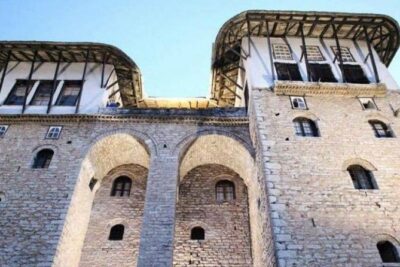
Walking Tour Baazar – The Argjiro Castle – Zekate house
Read our review →
Browse the lists this tour appears in