
Reviewed · COMMUNIST HISTORY TOURS
Private Cold War City Tour in Gjirokaster
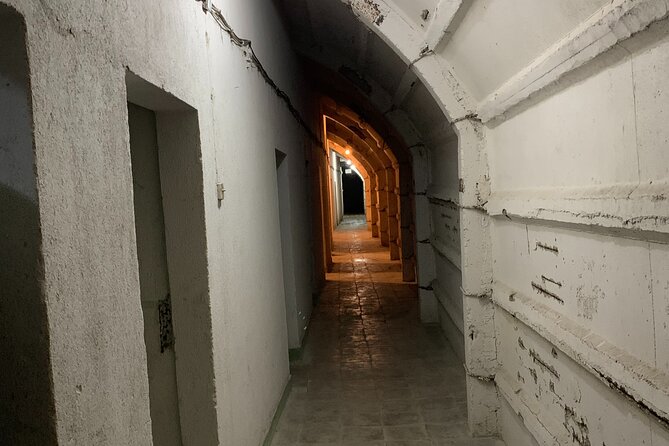
Gjirokaster’s most revealing stories are often underground or tucked behind old stone walls. This private tour takes you into the Cold War Tunnel, built to protect Albania’s political leaders, then connects that stark shelter to the lives shaped by the communist regime.
I like the private format, which gives you room to ask about Albania’s difficult past without trying to keep up with a large crowd. I also like the human focus, especially the memorial to Musine Kokalari, a writer and political figure who endured prison and hard labor rather than surrender her views.
The main drawback is that the tour is offered only in English, and the included sightseeing is not completely clear from the description. Entrance tickets cost an extra €14 per person, so confirm which sites that fee covers before booking.
Key points to know before booking
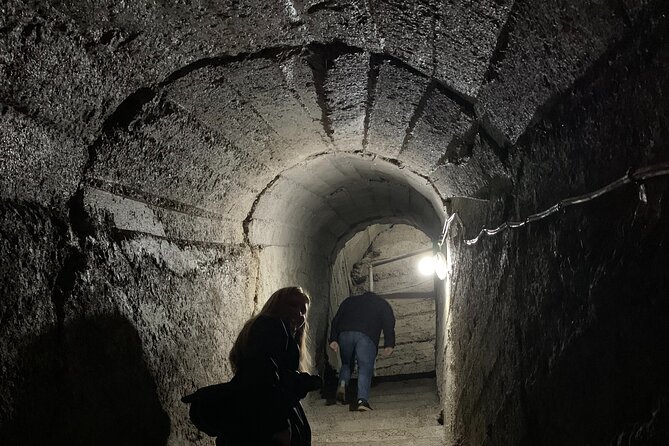
- The Cold War Tunnel goes below Gjirokaster: Spend about 50 minutes in a shelter built for the political bureau during the 1970s.
- Musine Kokalari gives the tour a personal face: Her memorial presents the life of Albania’s first female writer and a fierce opponent of the communist regime.
- The former Hoxha home has changed roles: The house where Enver Hoxha grew up was later used as a weapons museum and is now the Ethnographic Museum.
- You get a private guide, not a fixed group: Only your party takes part, which is useful for questions and a slower conversation.
- Coffee or tea is included: A short presentation and refreshment follow the historic visits.
- Budget extra for admission: The stated entrance fee is €14 per person, separate from the tour price of $75.74.
A Cold War tour with more than one story to tell
Many city tours stop at Gjirokaster Castle, point toward the stone rooftops, and move on. This one takes a narrower path through the city’s communist period. You see how leaders planned for war, how the regime punished dissent, and how one dictator’s family home became part of a museum.
That focus gives the experience a useful shape. It is not simply a tour of old buildings. You are asked to connect three different settings: a bunker for powerful officials, a memorial to a persecuted intellectual, and a house tied to Enver Hoxha, Albania’s long-serving communist leader.
The tour lasts roughly two and a half to three hours, depending on the exact schedule. Since it is private, the pace may feel more personal than a standard group walk. You can ask for more explanation at a stop that interests you, though the English-only format matters if you are not comfortable listening to historical detail in English.
More bunker and communist era tours in Gjirokaster:
- A Communist Manifesto: Tirana before and after
★ 5.0 · 50 reviews - The truest face of Communism
★ 5.0 · 18 reviews - Full-Day Tour of Albania’s Bunkers and Beaches, from Tirana
★ 5.0 · 16 reviews
Going underground in the 1970s Cold War Tunnel
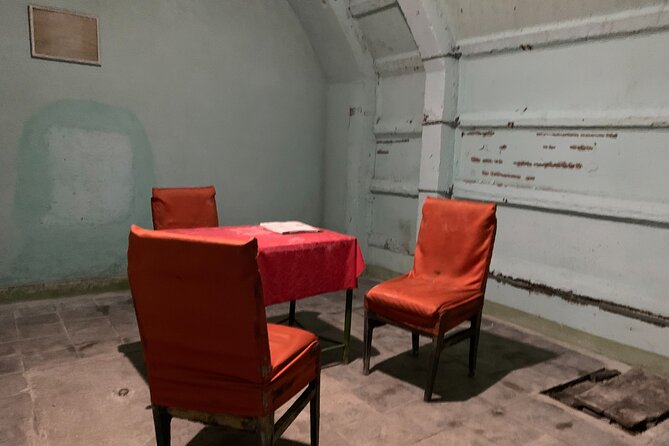
The first stop is the Cold War Tunnel, with about 50 minutes set aside for the visit. It was built to shelter the political bureau, the senior communist leadership, in case of attack. The purpose was not only survival. Leaders were meant to continue directing military action from below ground.
That detail makes the tunnel more than a cold, narrow passage. It shows how Albania’s leadership prepared for danger while keeping control of the state. The stories include the tunnel’s planned use, accounts connected with the regime, and facts about how the shelter would function during a crisis.
You should expect the tunnel to be cool. One visitor specifically noted the temperature as part of the experience, which makes sense given its underground setting. Bring a light layer if you are sensitive to cold, especially if you are visiting during warm weather.
The tunnel portion is also the place where language may matter most. The visit moves fairly quickly, and there are no translated text explanations in several languages. If you understand English only partly, ask your guide to slow down or repeat key points. The private format gives you a better chance to do that than a large group would.
The attraction has a practical limitation too. The tour materials refer to admission tickets costing €14 per person, but they do not clearly break down the price by site. Ask about this before setting out so the final cost does not surprise you.
Meeting Musine Kokalari at the My Muse Memorial
The second stop is the My Muse Memorial, with about 40 minutes planned for the visit. It honors Musine Kokalari, an Albanian writer, intellectual, and political figure from Gjirokaster.
Kokalari was Albania’s first female writer. Her opposition to the communist regime led to imprisonment at Burrel and hard labor at Rreshen. The account of her life is especially moving because poverty and punishment did not end her interest in reading and writing.
This stop changes the tone of the tour. The tunnel explains how the regime protected its leaders. Kokalari’s memorial helps you see what happened to someone who challenged the system. Her story gives the political history a human scale, far removed from official slogans and military plans.
You are introduced to her inner world rather than just her public biography. That makes this a useful stop for anyone interested in literature, women’s history, or the personal cost of political repression.
The memorial is listed with no separate admission charge in the itinerary, though the overall ticket note says admission fees total €14 per person. Again, clarify the ticket arrangement when you book. The descriptions do not fully explain whether that total applies to every paid site or to a particular combination of admissions.
Inside the former Hoxha home at the Ethnographic Museum
The third major stop is the Ethnographic Museum, planned for about 40 minutes. The building is the house where Enver Hoxha was born and raised.
The house itself has had a strange path. It burned and was rebuilt at five times its former size. It began as Hoxha’s family home, later became the Museum of Weapons, and now serves as the Ethnographic Museum. That changing purpose makes the building part of the political story, not just a place to display household objects.
Your guide presents the early part of Hoxha’s life and the way his rule affected opponents, acquaintances, childhood friends, and people who had once known him closely. The tone is meant to show both his rise and the fear tied to his leadership.
This can be a useful counterpoint to the Kokalari memorial. Kokalari’s life shows resistance and sacrifice. The Hoxha house shows how a private family setting became tied to a national dictatorship and later to the public effort to interpret that past.
The name Ethnographic Museum may cause some confusion if you expect a dedicated communist history museum. You will get political context, but the site’s present identity is broader. The tour description also says that you will learn how the building changed from a home to a weapons museum and then to its current role. That unusual sequence is one reason this stop deserves attention.
A few more Gjirokaster days to weigh up
- Gjirokastra- The Stone City & Blue Eye- The monument of Nature.
★ 4.5 · 180 reviews - Gjirokastra UNESCO & Ksamil Beach – From Tirana/Durres/Golem
★ 5.0 · 117 reviews - 1-Day Tour in Blue Eye, Monastery, Gjirokaster and Lekursi Castle
★ 5.0 · 76 reviews - Gjirokastra, Blue Eye, Ksamil & Saranda – Day Tour from Tirana
★ 4.5 · 47 reviews
Coffee, tea, and the less visible side of the city
After the visits, the tour closes with a short presentation in the provider’s hall and coffee or tea. This is a small feature, but it matters after an intense look at prison, repression, war planning, and political power.
The presentation focuses on parts of the story that are less visible to people passing through Gjirokaster. You can use this time to ask about details that were hard to absorb underground or at the memorial.
I like this pause because it gives the tour a natural ending rather than leaving you at the last doorway. It also helps explain the title’s promise of a warm experience. Do not expect a full meal or a long café session. The included drink is a simple refreshment attached to the closing presentation.
How the private format affects the experience
This is a private activity, so only your group takes part. That is the biggest practical advantage over a standard city tour. If your party wants to ask about the communist regime, Musine Kokalari, or the tunnel’s military purpose, you do not have to compete with a busload of people.
The small format also suits a subject that can be hard to discuss in a rushed way. Albania’s communist period involved punishment, surveillance, poverty, and political fear. A private guide can adjust the amount of background to your interests.
The tradeoff is that the quality depends heavily on the guide and on your comfort with English. Elisa has been praised for being kind and well informed, and she has also helped with another attraction when a party arrived early. That suggests a helpful approach, but you cannot assume Elisa will lead every departure.
One visitor found the tour interesting but could not understand everything because English was the only language offered. There were also no multilingual written explanations. If you need another language, this is not the right booking unless the operator confirms a change.
What the $75.74 price really includes
At $75.74 per person, this is not the cheapest way to see Gjirokaster. The price reflects a private guide and a roughly three-hour program, not just entry to one building.
You also receive coffee or tea and a guided visit to several politically important places. For a couple or small family that values privacy, the price may be reasonable because the guide’s attention is reserved for your party. For a solo visitor, the per-person cost is harder to justify unless you strongly want a private discussion.
Entrance tickets are not included. The stated additional cost is €14 per person. That means you should calculate the tour as $75.74 plus the admission fee, rather than treating the advertised price as the full cost.
The value is strongest if you want context. If your aim is only to see Gjirokaster Castle’s views or wander through the old streets, you may prefer to explore on your own. If you want the Cold War shelter explained, Kokalari’s life placed in context, and Hoxha’s family home tied to the wider story, the guide adds real value.
The description also refers to a visit to the castle and its prison building, while the detailed schedule names the Cold War Tunnel, My Muse Memorial, and Ethnographic Museum. Since the exact castle portion is not fully explained, ask whether the prison building is included in your departure and how the €14 admission is allocated.
Timing, meeting point, and the practical details
The tour begins and ends at C-Adventures & Tours, 6001 Gjirokaster, Albania. It does not provide transportation to another final location, so plan to return to the same meeting point.
A mobile ticket is accepted, and confirmation is provided when you book. The tour is offered in English. Service animals are allowed, and the meeting point is near public transportation.
Most people can take part, according to the activity information. Still, the Cold War Tunnel is underground, and the visit lasts close to an hour. If enclosed spaces or uneven historic sites are a concern, contact the operator before booking rather than relying only on the general participation note.
The stated duration ranges from two hours and 30 minutes to three hours and 10 minutes. Keep a little space before your next plan. The length may depend on how the visits and final presentation run.
Cancellation is free if you cancel at least 24 hours before the local start time. Cancellations or changes made within 24 hours are not refunded or accepted. That policy is fairly simple, but it makes an early decision useful if your Gjirokaster plans are uncertain.
Who should book this Gjirokaster experience?
I would recommend this tour to you if you want political history rather than a standard walk through old streets. It suits readers, history fans, and anyone curious about how ordinary lives were affected by Albania’s communist rule.
It is also a good match for a couple, family, or small group that prefers to ask direct questions. The coffee break, private guide, and focused route make the experience feel more like a conversation than a parade from one monument to the next.
You should think twice if you need multilingual interpretation, want a low-cost tour, or mainly want castle views. The English-only format and extra €14 admission fee are important considerations. The itinerary also needs clarification regarding the castle prison building and which admissions are covered.
Should you book the Private Cold War City Tour?
Book it if you want Gjirokaster’s communist past explained through real places: a leadership shelter, a memorial to Musine Kokalari, and the former Hoxha home. The private format and closing coffee or tea make it more comfortable than a bare-bones bunker visit.
Skip it if your priority is a broad sightseeing tour, a multilingual guide, or a clearly itemized all-inclusive price. Before paying, confirm the castle prison visit, the €14 ticket coverage, and whether an English-only tour suits everyone in your group. With those points settled, this is a focused and worthwhile way to understand a side of Gjirokaster that you would likely miss on a casual walk.
FAQ
Where does the tour begin and end?
It begins and ends at C-Adventures & Tours, 6001, Gjirokaster, Albania.
How long does the tour last?
The approximate duration is between two hours and 30 minutes and three hours and 10 minutes.
What language is the tour offered in?
The tour is offered in English only.
Is the tour private?
Yes. Only your group participates in the activity.
What is included in the tour price?
A guided tour and coffee or tea are included.
Are entrance tickets included?
No. Entrance tickets are listed as an additional €14 per person.
Which places are visited?
The detailed schedule includes the Cold War Tunnel, the My Muse Memorial honoring Musine Kokalari, and the Ethnographic Museum in the former home of Enver Hoxha. The tour information also refers to the city castle and its prison building, so confirm that part before booking.
Is the tour suitable for most people?
The activity information says most people can participate. Service animals are allowed, and the meeting point is near public transportation.
Can I cancel for a full refund?
Yes, if you cancel at least 24 hours before the experience start time. Cancellations within 24 hours are not refunded.
Just added around Gjirokaster
- Day Tour of Gjirokastra & Blue Eye from Tirana or Durres★ 5.0 · 10 reviews
- Private Day Trip to Gjirokastra from Tirana w/Lunch★ 5.0 · 6 reviews
- Tirana: Day Tour of Gjirokastër and Blue Eye★ 4.5 · 13 reviews
- Private Day Tour of Gjirokastra from Tirana★ 5.0 · 10 reviews
- Private Tour from Tirana, Gjirokastër , Saranda and South Riviera★ 5.0 · 10 reviews
- Visit the City of Gjirokastra★ 4.5 · 12 reviews
- Visit Blue Eye, Gjirokastra & Lekursi Castle★ 5.0 · 6 reviews
- Blue Eye and Gjirokaster, Half Day Nature & Historical Tour★ 5.0 · 12 reviews
Communist History Tours, compared.
Full-Day Tour of Albania’s Bunkers and Beaches, from Tirana
Read our review →
Cultural Tour in Tirana including House of Leaves
Read our review →
Tirana’s Communist Past: A Tasting Tour with Traditional Lunch
Read our review →Browse the lists this tour appears in