
Reviewed · PEAKS OF THE BALKANS TREKS
Self – Guided Peaks of the Balkans tour in 7 days
The appeal here is simple: in one week, you walk through three Balkan countries while sleeping in village guesthouses and high shepherd huts. The route reaches Talijanka, Valbona Pass, Gjeravica, and remote valleys that are hard to arrange on your own.
I like the genuine contact with mountain life, from local food in Lëpushë to simple beds in Doberdol. I also like the practical support from Choose Balkans, especially the regular check-ins associated with Brikena Shametaj and Sirma. The main caution is physical: this is a serious trek, and carrying your belongings can make the long climbs much harder.
At a glance: what makes this trek different
- Three-country route: Cross between Albania, Montenegro, and Kosovo several times on foot and by local transport.
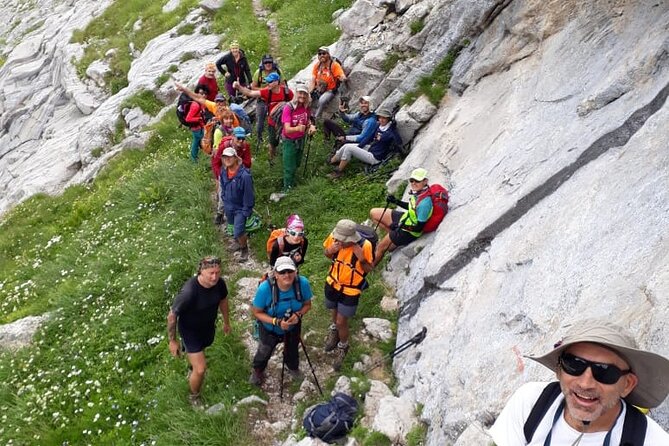
- Long mountain days: Expect roughly four to eight hours of walking each day, with an optional ten-hour day.
- Remote overnight stops: Sleep in traditional guesthouses, then in basic shepherd huts at Cerem and Doberdol.
- Self-guided, not unsupported: You hike without a guide beside you, but transport, accommodation, route details, and check-ins are arranged.
- Small maximum group: The tour accepts no more than 10 people, which suits hikers who want independence without handling every detail.
- Strong value for committed hikers: The $1,237.53 price covers seven days of accommodation, selected transfers, border costs, petrol, and breakfast, but not most meals.
Why the Peaks of the Balkans route is worth your time
The Peaks of the Balkans is not a string of lookout points connected by easy paths. It is a demanding route through the Dinaric Alps, with steep climbs, rough ground, forest, meadows, and old mule trails.
The reward is variety. One day brings sharp gray peaks around Montenegro’s Grbaje Valley. Another leads through Albanian shepherd country. Later, you reach Kosovo’s highest peak and finish with a city walk in Gjakova.
I especially like the way the route connects scenery with ordinary mountain life. Shepherd huts are not staged attractions. They are working places, and the simple food and sleeping arrangements help you understand how far these communities are from city life.
The self-guided format also gives you more quiet time than a conventional group hike. You can walk at your own pace within the route plan, then contact the local team when you need help. That freedom is useful, but it demands that you pay attention to directions, weather, timing, and your own limits.
More Peaks of the Balkans itineraries:
- Self-guided: Peaks of the Balkans Tour in 8 days
★ 5.0 · 32 reviews - Peaks of the Balkans Tour: Theth, Valbona & Koman Lake in 5 days
★ 5.0 · 11 reviews - Self – Guided Peaks of the Balkans tour in 10 days
★ 5.0 · 10 reviews
Day 1: Tamare, Lëpushë, and Talijanka
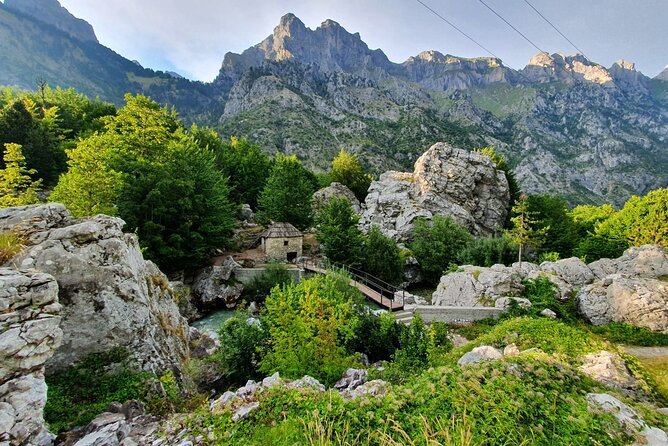
The trip begins at 6:00 a.m. in Tirana, with transport toward Tamare and Lëpushë. The first day is already an introduction to the northern Albanian mountains, rather than a gentle warm-up in town.
Lëpushë is a small village known for its scenery and spring flowers. The name refers to yellow flowers found in the area, and the region is also known for local organic dishes. This is one of the first places where the trip’s food culture matters. Meals are not just fuel after a climb, but a way to taste ingredients and cooking found in northern Albania.
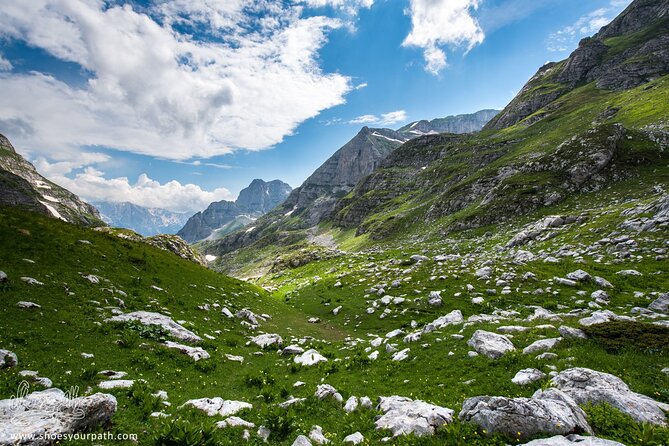
The route then leads toward Vuthaj in Montenegro, with a hike to Talijanka Peak. The crossing into Montenegro is part of the walk, not a separate sightseeing stop. From Talijanka, you look into the U-shaped Grbaje Valley, framed by stark, sharply shaped gray mountains. Lake Plav can also be seen from the summit.
That view is one of the visual high points of the entire week. It also shows why the route needs a good level of fitness. The day includes hiking and transport, and the final 40 minutes to Vuthaj are by minivan.
After reaching Vuthaj, you can walk about 40 minutes to the Ali Pasha Springs, or rest at the guesthouse. I would treat the springs as an optional extra, not something to force into an already full day.
Day 2: from Montenegro back to Theth
Day two takes you from Vuthaj toward Theth, crossing back into Albania. It is listed as an eight-hour day, so you should expect a full day on foot rather than a short transfer with a walk attached.
A hidden water spot is included along the way. The route also passes below Arapi Peak, at 2,217 meters, and Jezerca Peak, at 2,694 meters. These high summits give the day its scale, even if you are not climbing them.
Shepherd huts appear along the route, offering a clear look at life away from roads and towns. This is a useful reminder that the Albanian Alps are not only scenic territory. They are also working mountain country.
In Theth, the itinerary includes the Old Church and the Lock-In Tower. Both carry centuries of local stories. The tower is especially tied to the social history of Theth and gives the village a stronger sense of place than a simple overnight stop would provide.
You sleep in a local guesthouse. Shared rooms accommodate two to five people, so privacy is not guaranteed unless you pay an extra 40 euros per night per room and a private room is available.
Day 3: the hard climb over Valbona Pass
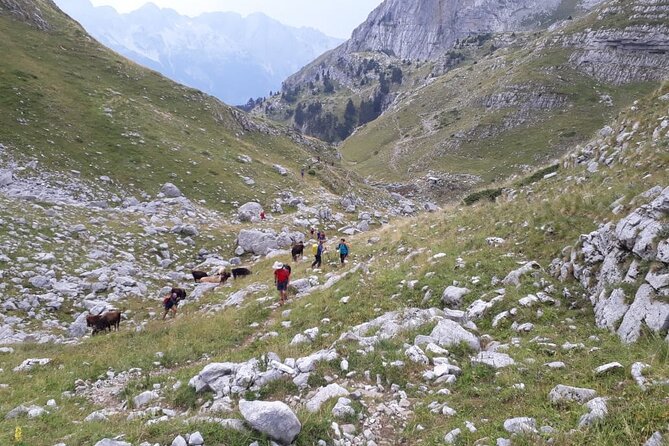
The walk from Theth to Valbona is one of the week’s defining days. It takes about six to eight hours through remote terrain and follows an old mule route.
The trail eventually gives you views of Theth Valley on one side and Valbona Valley on the other. At Valbona Pass, the view opens toward the Accursed Mountains, also called Bjeshket e Nemuna. You continue through forests and open mountain country, with a chance of meeting shepherds and their flocks.
This is not a day to underestimate. The route is described as intense, and the length becomes more demanding if you carry too much. Several people who took this trip found heavy backpacks made the elevation changes notably harder.
Valbona is a welcome overnight stop because you can recover in a guesthouse instead of a hut. Still, do not plan a late start or a long evening out. You will need food, water, and enough energy for the pass.
A few more Albanian Alps days to weigh up
- Small Group Hiking Tour; Peaks of the Balkans Trail in 7 Days
★ 5.0 · 8 reviews - Discover the Best of Albania: 7 Days of Highlights & Hidden Gems
★ 5.0 · 25 reviews - 7 Day Tour of Albania, North Macedonia & Kosovo
★ 5.0 · 13 reviews
Day 4: Cerem and the optional Zla Kolate climb
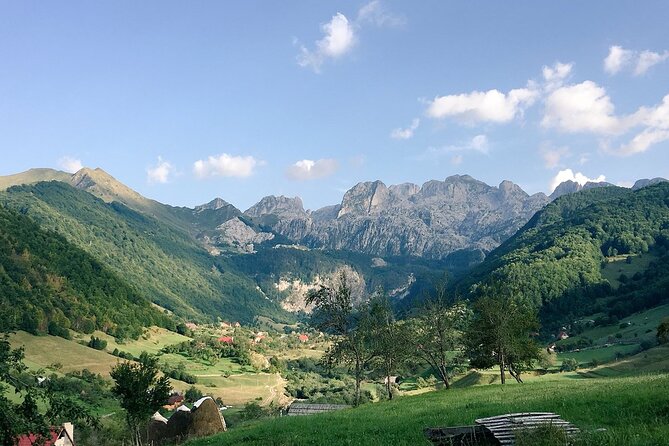
Transport takes you to the starting point for the hike to Cerem. The route moves through forests and meadows before reaching a canyon-like area where snow may remain even in summer.
You can add the climb to Zla Kolate, Montenegro’s highest peak, but it adds about three hours, making the day roughly ten hours in total. That option is best for hikers who are already comfortable with the pace. If the previous days have left your legs tired, the standard route is the sensible choice.
The day has several unusual features beyond the mountain views. You pass a rock surface shaped like the face of an unhappy old man, and a cave that sends out extremely cold air. The exit is unknown according to the tour description, so this is a curiosity beside the trail, not an underground excursion.
Cerem sits at about 1,300 meters, with shepherd huts serving as the overnight accommodation. Expect simplicity, not hotel service. The setting is the point: you are high in the mountains, far from normal town comforts.
Day 5: pine forests and the rough night at Doberdol
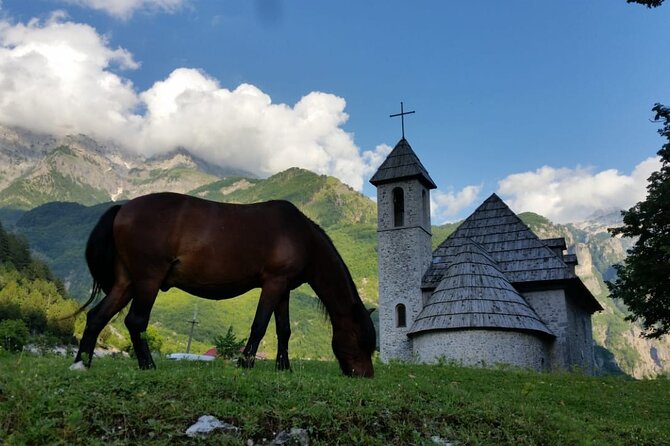
From Cerem, you follow a mule track toward Doberdol. For about two hours, the route crosses Montenegro before continuing through pine forest. Depending on the season, you may find blueberries, blackberries, and raspberries along the way.
The trail reaches about 2,100 meters. It also passes near Albania’s only National Reserve, an area associated with brown bears and the last estimated population of roughly 40 lynxes in the Balkans. Wildlife sightings are not promised, but the setting gives the route added importance.
Shepherd villages offer a chance to stop for coffee or another drink. These breaks are valuable because the day lasts about seven hours and the trail is remote.
Doberdol is around 1,800 meters above sea level. The food is made with regional ingredients, but the sleeping arrangements are basic. You will have a mattress rather than a hotel bed, and conditions are simple. This is the night to pack a sleeping liner if you normally prefer your own bedding, although the supplied information does not specify what each hut provides.
Day 6: Gjeravica and the return to civilization
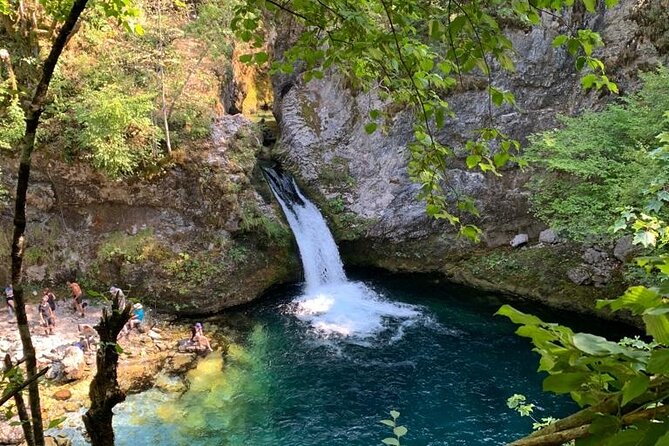
Day six shifts the mood. You still hike to Gjeravica, Kosovo’s highest peak and the second highest summit of the Accursed Mountains, but the route then begins moving toward roads and towns.
From Gjeravica, views reach toward the Accursed Mountains in one direction and the Sharr Mountains in the other. Three alpine lakes are available for swimming, and one has a heart shape that makes it particularly memorable.
The walk to Gropat e Erenikut takes about four hours, followed by roughly an hour before the 4×4 transfer to Gjakova. This is a useful change after several days of remote walking. You finish the night in a hotel in Gjakova, with a proper chance to recharge.
The transport matters here. Some connections are included, but not every local transfer is covered. The organized ride from Gropat e Erenikut to Gjakova is included, while other unlisted transfers may cost extra.
Day 7: Gjakova’s bazaar and the ride back to Tirana
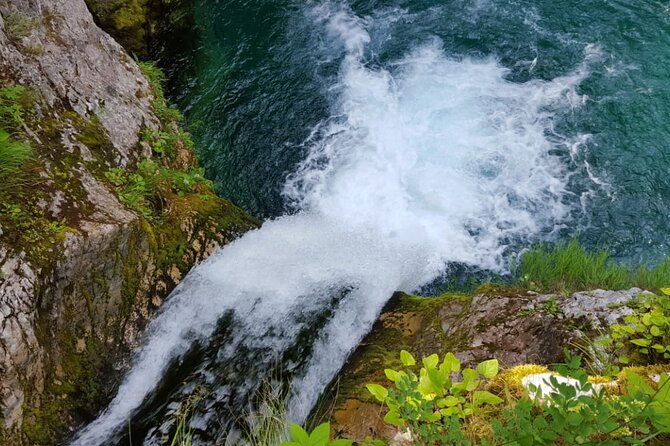
The final day is much less demanding physically. Gjakova has Kosovo’s oldest and largest bazaar, rebuilt after damage from several wars. Its shops sell traditional clothing and local goods, making it a useful place to see a different side of the region after days of mountain paths.
The city walk also includes the clock tower and Hadum Mosque. Built in the 16th century, the mosque contains arabesque decoration and offers a look at early Islamic architecture in the Balkans.
The return journey goes through Prizren before reaching Tirana’s bus terminal. You are dropped at the terminal, not at your hotel, so you need to arrange your final taxi or bus ride yourself. That is a small detail, but it matters after a long transfer with hiking gear.
Accommodation, meals, and what to carry
Accommodation changes often. You sleep in shared rooms in traditional guesthouses, then in shepherd huts at Cerem and Doberdol, and in a hotel in Gjakova. Rooms can hold two to five people, and private rooms cost an extra 40 euros per night if available.
Breakfast is included, but lunches, dinners, drinks, and snacks are not. A meal generally costs about 12 to 15 euros. Because several walking days last seven or eight hours, budget for trail snacks and drinks rather than relying only on breakfast and dinner.
Pack light. You carry your belongings during the trek, and the route is much harder with a large backpack. Excess luggage transport may be possible, but the stated minimum is steep: 770 euros for one person or 385 euros per person for a group. Storage in Tirana may be the better option.
Bring proper hiking footwear, weather protection, and enough clothing for changing mountain conditions. The supplied information does not give a detailed packing list, so ask Choose Balkans what each accommodation provides before departure.
Is $1,237.53 a fair price?
The price is reasonable for a seven-day, three-country trek if you value the planning and transport support. It includes shared accommodation, the Tirana to Lëpushë transfer, selected local rides, border passes, road taxes, petrol, and breakfast.
You still pay for most meals, drinks, snacks, tourist taxes, entry tickets, souvenirs, and some transfers. The total cost will therefore be higher than the headline price.
The value comes from route coordination. Border crossings, remote guesthouses, mountain transport, and the return to Tirana would be awkward to arrange separately. The self-guided format also keeps you from paying for a guide to walk beside you every hour.
The strongest part of the service is the ongoing contact. Brikena Shametaj and Sirma are described as checking in during the route and helping with questions or arrangements. That support is especially useful for a solo hiker or anyone who wants independence without having to solve every problem from scratch.
Who should book this trek?
I would recommend it to an experienced hill walker who wants dramatic scenery, local accommodation, and a route across borders. It suits people who enjoy long days, basic facilities, and the satisfaction of reaching places that are not easy to access.
It is not a good match if you want short walks, guaranteed private rooms, luggage transfers, or hotel comfort every night. You also need suitable health and travel insurance, and you are responsible for arranging it yourself.
The group limit of 10 helps keep the experience small, but the tour remains self-guided. You should be comfortable following route information, managing your pace, and making sensible decisions in changing weather.
Should you book the Peaks of the Balkans tour?
Book it if you want a demanding mountain journey with the difficult planning handled for you. The combination of Talijanka, Valbona Pass, Gjeravica, shepherd villages, and Gjakova gives you more than a scenic hike. It connects three countries and several ways of life.
Think twice if you are new to multi-day hiking or dislike carrying a pack. The main risk is not the price. It is misjudging the physical effort, especially on the eight-hour days and the optional ten-hour route to Zla Kolate.
The cancellation policy is strict: the experience is non-refundable and cannot be changed for any reason. Confirm your fitness, insurance, luggage plan, and preferred room arrangements before paying.
FAQ
How long is the Peaks of the Balkans tour?
The tour lasts seven days, approximately, beginning in Tirana and ending with a transfer back to Tirana.
How early does the tour start?
The start time is 6:00 a.m. from the meeting point at 8RJ3+WV5 in Tirana, Albania.
Which countries does the route visit?
The route crosses Albania, Montenegro, and Kosovo, with several border crossings during the trek.
Is this a guided hiking tour?
It is self-guided. Choose Balkans arranges accommodation, selected transport, route support, and check-ins, but a walking guide does not accompany you throughout the trail.
How difficult is the hiking?
You need strong physical fitness and some hiking experience. Walking days generally last four to eight hours, and one optional route can take about ten hours.
Are meals included?
Breakfast is included. Lunches, dinners, drinks, and snacks are not included. A meal costs about 12 to 15 euros.
What kind of accommodation is provided?
You stay in shared traditional guesthouses or shepherd huts, with rooms for two to five people, followed by a hotel night in Gjakova.
Can I book a private room?
Private rooms may be available for an additional 40 euros per night per room. Availability is not guaranteed.
Where does the tour finish?
The final transfer ends at the East Terminal in Lundër 1, Tirana. Transport from the bus terminal to your hotel is not included.
Just added around Albanian Alps
- 2 Days Tour of Theth & Blue Eye★ 5.0 · 5 reviews
- 12 Day Self-guided Tour: Peaks of the Balkans★ 5.0 · 6 reviews
- Tour of Komani, Valbona, Thethi, Blue Eye in three days★ 5.0 · 5 reviews
- Self – Guided Peaks of the Balkans tour in 10 days★ 5.0 · 10 reviews
- Hiking Tour of Kelmed – Vajusha Peak, Lepushe & Vermosh 3 Days★ 5.0 · 5 reviews
- Transfer from Tirana to Theth or Vice Versa★ 5.0 · 4 reviews
- Semi-Private Hiking Tour; Peaks of the Balkans in 10 days★ 5.0 · 8 reviews
- Peaks of the Balkans – 8 Days Tour★ 5.0 · 6 reviews
Peaks of the Balkans Treks, compared.
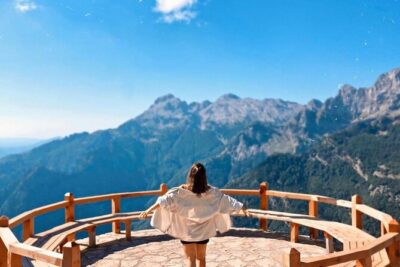
Self-guided: Peaks of the Balkans Tour in 8 days
Read our review →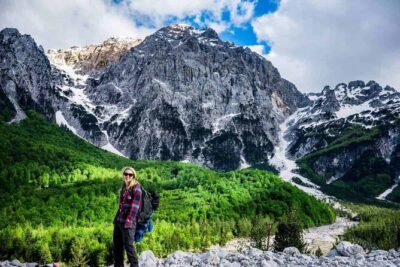
Peaks of the Balkans Tour: Theth, Valbona & Koman Lake in 5 days
Read our review →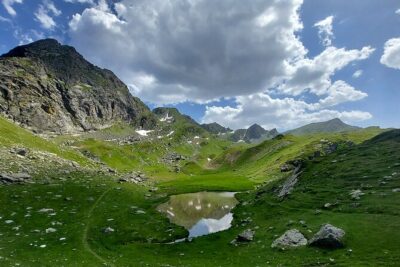
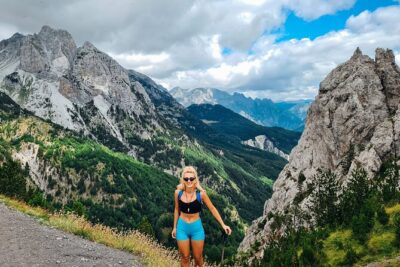
Self – Guided Peaks of the Balkans tour in 10 days
Read our review →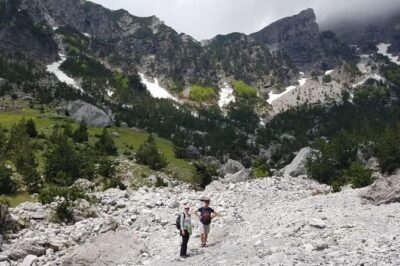
Small Group Hiking Tour; Peaks of the Balkans Trail in 7 Days
Read our review →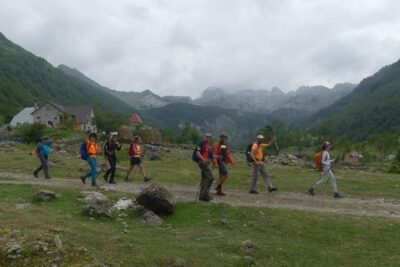
Semi-Private Hiking Tour; Peaks of the Balkans in 10 days
Read our review →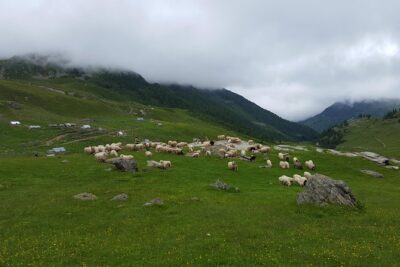
Browse the lists this tour appears in