
Reviewed · COMMUNIST HISTORY TOURS
The truest face of Communism
Tirana’s communist past is not locked away in a textbook. You’ll see it in a pyramid built for a dictator, a bunker designed to survive nuclear war, and Blloku, once reserved for Albania’s ruling elite and now packed with cafés and bars. Bunk’Art 1 gives the tour its strongest historical focus, with underground rooms, corridors, and exhibits spread across a former Cold War shelter.
I like the way this tour connects official monuments with ordinary Albanian life, especially through stops at Blloku and the memorial to political prisoners at Postbllok. I also like the private format, hotel pickup, coffee or tea, and rakia, since guides such as Leo, Dio, Aldo, and Eni have been praised for explaining the past in clear English and adding family stories.
The main caution is physical. Although an air-conditioned vehicle is included, one account describes the day as entirely on foot and nearly five miles of walking. Ask about the transport plan before booking, and wear good shoes.
Key points to know before booking
- Bunk’Art 1 is the main attraction: Expect about an hour underground in a former nuclear shelter built in the 1970s.
- The tour is private: Your group participates on its own, with hotel pickup available in Tirana.
- Communist-era sites are balanced with modern Tirana: Blloku shows how a restricted political district became the city’s café and nightlife center.
- A personal guide matters here: Leo, Dio, Aldo, Eni, Mimi, and DC have all been praised for strong English and personal stories.
- Food and drinks are part of the experience: Coffee or tea, rakia, and a traditional food stop are included, but lunch is not.
- Plan for possible long walks: The stated vehicle service and the walking experience described by one participant do not perfectly match, so clarify the day’s format.
Why Tirana’s communist story works best as a walking conversation
Albania’s communist period can be hard to understand from monuments alone. Enver Hoxha ruled from 1944 until his death in 1985, and the country became known for severe isolation, political repression, and an obsession with defense. This tour helps you connect the official image of the regime with the spaces where power, fear, and privilege played out.
The route moves through central Tirana rather than treating the past as a single museum visit. You begin at the city’s main square, pass the former dictator’s pyramid, see evidence of forced labor and political imprisonment, and then enter a bunker built for an attack that never came.
That range is valuable. You are not only looking at architecture. You are also seeing how Tirana has reused, ignored, or reinterpreted the physical remains of dictatorship.
Because the tour is private, your guide can spend more time on the subjects that interest you. If you want family memories, architecture, Cold War politics, or daily life under communism, say so early. Several guides, including Leo, Dio, Aldo, and Eni, have been praised for making the story personal instead of simply reading museum labels.
More bunker and communist era tours in Tirana:
- A Communist Manifesto: Tirana before and after
★ 5.0 · 50 reviews - Full-Day Tour of Albania’s Bunkers and Beaches, from Tirana
★ 5.0 · 16 reviews - Communist History Tour Tirana & Street Food
★ 5.0 · 15 reviews
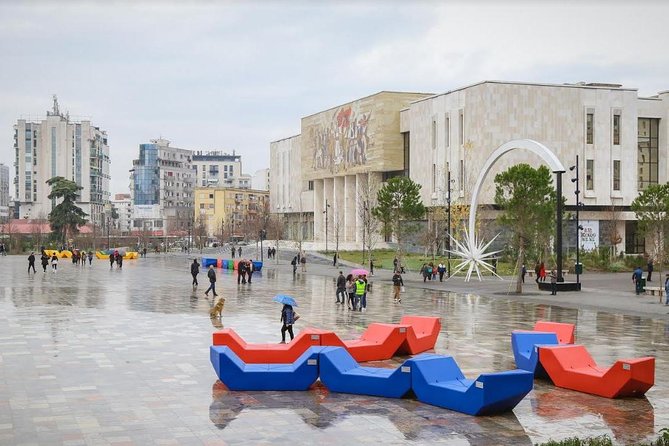
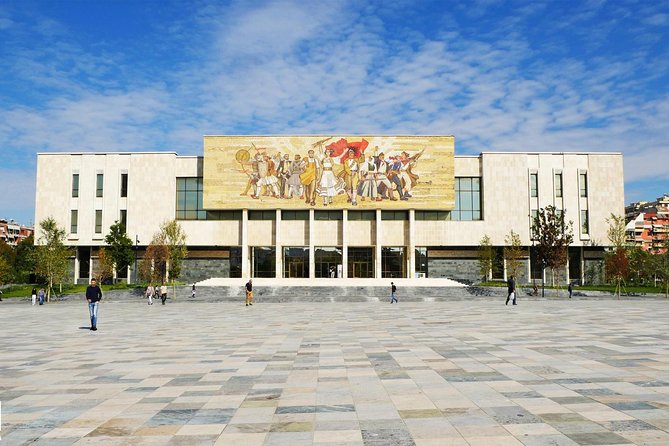
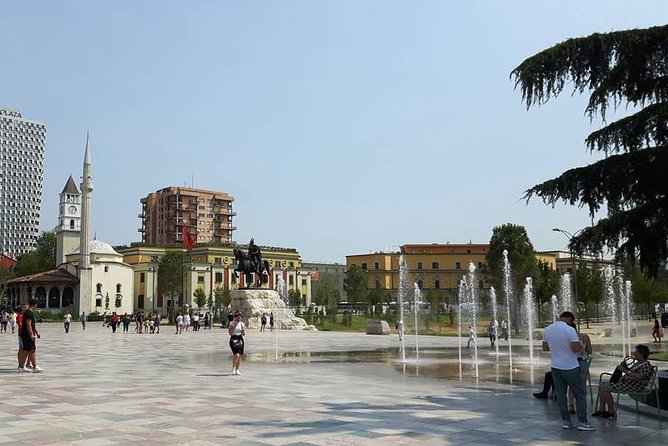
Skanderbeg Square: Tirana’s grand opening scene
The morning begins at Skanderbeg Square, either at 9:00 a.m. or with pickup from your hotel, hostel, or another agreed location in Tirana. This is the city’s central stage, surrounded by some of its most recognizable buildings.
You’ll see the Et’hem Bey Mosque, the Clock Tower of Tirana, the National Theater of Opera and Ballet, the National Bank of Albania, and the Tirana International Hotel. The stop lasts about 30 minutes, and there is no admission charge.
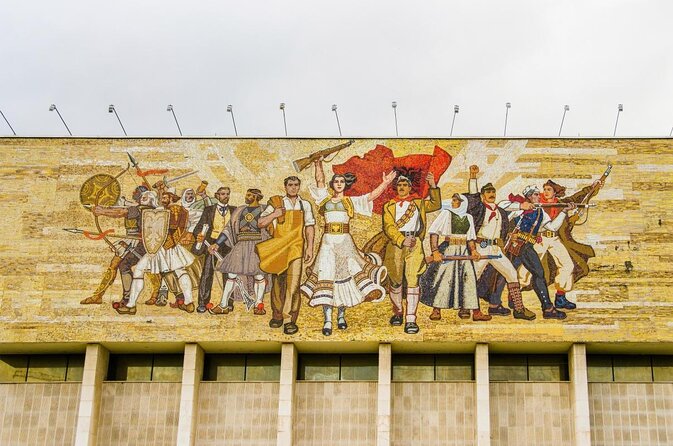
The square works well as a starting point because it places several layers of Tirana in one view. The mosque and clock tower reflect the city’s Ottoman-era roots, while the opera house and large hotel reflect the monumental style favored by the communist state and later governments.
The opera and ballet building has a particularly curious detail: the first brick was laid by Nikita Khrushchev, the former leader of the Soviet Union. That small fact helps explain Albania’s former ties with the wider communist world, even though Hoxha later pushed the country toward extreme isolation.
You’ll want to listen closely here. The square itself is easy to photograph, but the guide’s explanation is what gives the buildings meaning. It is also a useful place to ask how the city changed after communism fell.
The Hoxha Pyramid: a monument with an uncertain afterlife
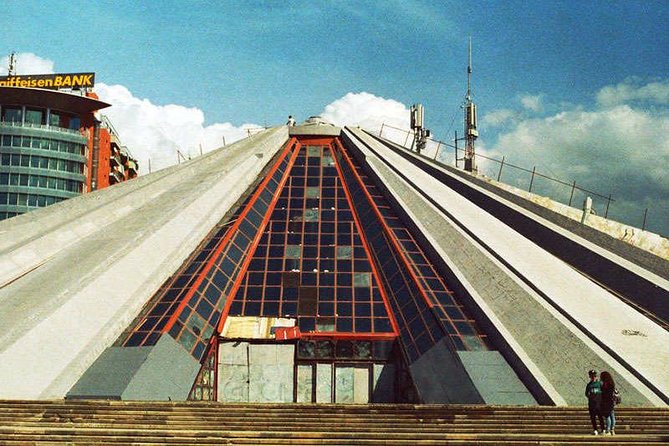
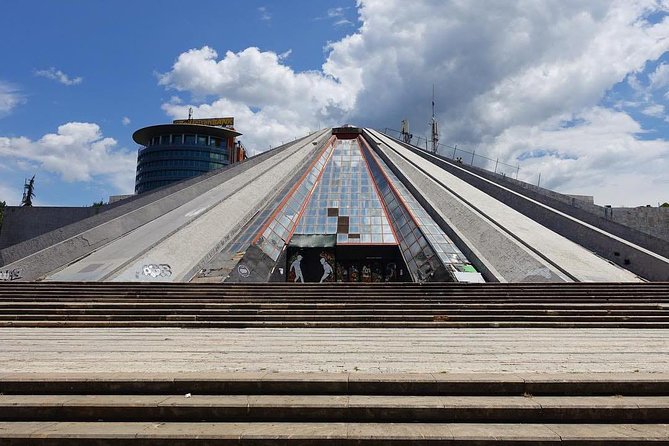
A short visit to the Enver Hoxha Pyramid follows. The building was created as a museum for Hoxha, Albania’s long-serving communist leader, and opened as a mausoleum in 1988, three years after his death. It was co-designed by his daughter.
The pyramid has had several lives since the end of communism. It has been used as a cultural center and as a national television office. A plan to destroy it was also proposed, but the building survived and became one of Tirana’s most recognizable sights.
You’ll spend about 15 minutes here. That may sound brief, but the stop is mainly about understanding what the building represented and how its meaning changed. It is not presented as a polished memorial to Hoxha. Instead, it reflects Albania’s uneasy relationship with a difficult past.
The structure’s shape and scale once projected power. Today, its continued presence raises a different question: should a former dictator’s monument be erased, reused, or left in place as a warning? Your guide can help explain why the pyramid remains part of daily Tirana rather than being treated as a sacred site.
Postbllok: three objects that explain repression
Postbllok, also called the Checkpoint Monument, is a compact but powerful memorial to communist isolation and political suffering. The stop takes about 10 minutes and has no admission charge.
The memorial combines three main elements:
- A concrete bunker, one of thousands built across Albania
- Concrete supports taken from the Spaç labor camp
- A painted section of the Berlin Wall from Potsdamer Platz
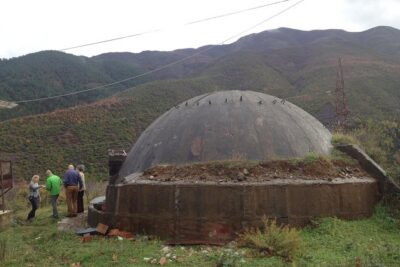
The bunker represents the regime’s fear of invasion. Albania built huge numbers of bunkers, including shelters intended for individual families, in case of nuclear war or another global conflict. Many remain scattered around the country.
The pieces from Spaç point to a darker part of the system. Political prisoners were sent to the notorious labor camp between 1968 and 1990. The concrete is not just construction material here. It links the country’s defense obsession with forced labor and punishment.
The Berlin Wall fragment adds an international frame. Albania’s isolation was part of the wider Cold War, but the country’s version was especially strict. You can understand that better at this memorial than you might from a general history display.
This is a short stop, so it rewards a good guide. Give yourself enough attention to take in the details rather than treating it as a quick photo break.
A few more Tirana days to weigh up
- Hike Gamti Mountain with Bovilla lake view & canyon- From Tirana
★ 5.0 · 1,280 reviews - Walking Tour of Tirana
★ 5.0 · 646 reviews - Albanian Night Show: Traditional Music, Dance & Dinner in Tirana
★ 5.0 · 431 reviews - From Tirana- Hiking Tour to Bovilla Lake & Gamti Mountain
★ 5.0 · 358 reviews
Blloku: from forbidden district to Tirana nightlife
The tour then passes through Blloku, one of Tirana’s most striking examples of political change. Under communism, this neighborhood was reserved for members of the political bureau and their families. Ordinary people could not simply wander in, and the area was absent from some maps.
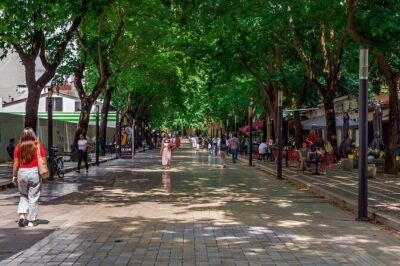
Today, Blloku is one of the city’s main social districts. You’ll find cafés, cocktail bars, pubs, boutiques, colorful streets, and street art. The contrast is almost too neat: a place once defined by privilege and secrecy has become a popular center for public life.
You’ll also see Enver Hoxha’s former villa from the outside. It remains unused and closed to entry, but its presence helps make the story concrete. The villa is a reminder that the regime’s leaders lived differently from much of the population.
This stop lasts about 50 minutes and includes a food and drink break at a restaurant nearby. Traditional food, coffee, and rakia are part of the experience. Byrek may be included during the food stop, as it was part of one reported outing, but the exact dishes can vary.
Rakia is a strong Albanian spirit, so take the warning seriously. A small serving can be enough, especially if you are continuing on foot. Lunch is not included, so do not assume this tasting replaces a full midday meal.
I like this section because it keeps the tour from becoming a string of grim sites. You can talk about repression while also seeing how young Tirana lives today. That contrast is one of the clearest ways to understand the city.
Bunk’Art 1: the tour’s most memorable hour
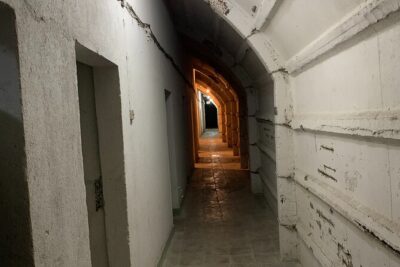
Bunk’Art 1 is the emotional center of the experience. You’ll spend about an hour inside nearly 3,000 square meters of underground rooms, corridors, and chambers built during the 1970s.
The shelter was designed to survive a nuclear attack. It used double-concrete walls and had enough space for more than 100 people. It was intended for Albania’s political elite, but the attack it was built for never happened.
Today, the rooms contain exhibits about Albania’s communist period. The underground setting changes the mood immediately. You are not looking at a bunker from the outside and moving on. You are walking through the tight, labyrinth-like spaces that were meant to support a government during a catastrophe.
This is where a guide adds real value. Museum labels can give you dates and names, but a guide can explain why the bunker existed, who it was intended to protect, and how the regime’s fears shaped everyday life. Aldo was praised for sharing family stories about life under communism, while Leo was singled out for explaining Bunk’Art in a way that made the exhibits easier to understand.
The museum may be especially moving if you have limited time in Tirana. It brings together military planning, political power, isolation, and fear in one place. At the same time, you should know that underground museums are not ideal for everyone. If you dislike confined spaces, ask your guide about the route and pace before entering.
Transport, walking, and the real time commitment
The experience is advertised as lasting about four to five hours, with an air-conditioned vehicle and hotel pickup included. Pickup can be arranged from your hotel, hostel, or another agreed departure point in Tirana.
Still, plan conservatively. One account describes a fully walking day covering almost five miles, despite the vehicle information. That could reflect a change in the day’s arrangement, a private group preference, or a different operating format, but the difference matters.
Ask two simple questions before the morning begins:
- Will the vehicle remain with the group between stops?
- How much walking should I expect?
The route is central enough that some walking is natural, especially around Skanderbeg Square, the Pyramid, Postbllok, and Blloku. Bunk’Art 1 may require separate transport depending on the day’s setup. Comfortable shoes, water, and a little flexibility will make the experience easier.
The private format is a major advantage if you want to move at your own pace. It also means the quality of the day depends partly on how well your group stays together. One account noted that keeping everyone moving can be difficult, even in a small group. Agree on meeting points and timing if your party tends to wander.
Guides, language, and personal stories
The tour is offered in English, and the guide can make a major difference. Dio was praised for clear English and a strong command of Albanian history. Leo was described as polite, attentive, and personal. Aldo was especially valued for stories about how communism affected his family, while Eni helped turn each stop into a meaningful part of the day.
Mimi and DC were also praised for being helpful and flexible, including during requests beyond the basic route. Their outing included raki, coffee, and byrek, which shows how the food break can become part of the conversation rather than a rushed add-on.
Guide assignments can change, so you should not book solely to receive one named person. Still, the repeated praise for several guides suggests that the company has staff who can handle both facts and personal discussion.
This subject needs care. A guide who only lists dates may leave you with a dry account of buildings. A guide who connects those places to family memories and daily life can help you understand why Albania’s communist past still matters.
Is the $90.11 price fair?
At $90.11 per person, this is not the cheapest way to see central Tirana. The price makes more sense if you value a private guide, hotel pickup, admission to Bunk’Art 1, and the included drinks and food stop.
You are paying for more than transport between landmarks. The useful part is the interpretation: why the pyramid was built, why ordinary people were kept out of Blloku, what Spaç represented, and how the bunker fits into Albania’s Cold War story.
The value is strongest for a first visit or a short stay. If you have only 48 hours in Tirana, this tour covers several major sights in half a day and gives you a clear framework for exploring on your own later.
It is less attractive if you prefer independent museum visits, dislike fixed schedules, or want a full meal included. Lunch is separate, and the total price may feel high if you already know Tirana well.
Free cancellation is available up to 24 hours before the start time. Weather can also affect the activity, in which case a different date or a full refund is offered.
Who should book this Tirana history tour?
I would recommend it to you if you want a guided introduction to Albania’s communist era, especially if you are short on time. It suits history-minded couples, families, and private groups who prefer to ask questions rather than follow a large crowd.
It is also a good fit if you want to combine serious history with ordinary city life. Skanderbeg Square and Bunk’Art provide the structure, while Blloku, rakia, coffee, and traditional food keep the day connected to present-day Tirana.
You may want another option if your mobility is limited, if you want a relaxed café-focused city tour, or if you are uncomfortable in underground spaces. The official transport details also deserve confirmation before payment because the amount of walking may vary.
Final verdict: a strong choice for first-time Tirana visitors
Book this tour if you want Tirana’s communist story explained through places you can actually see and enter. The Pyramid, Postbllok, Blloku, and Bunk’Art 1 form a useful sequence, moving from state power to repression, privilege, fear, and modern reuse.
The standout is Bunk’Art 1, but the best part of the day may be the guide’s ability to connect it with family experience. Choose this tour for context, conversation, and efficient sightseeing. Just confirm the vehicle arrangement, prepare for substantial walking, and remember that lunch is not included.
FAQ
How long does the tour last?
The experience lasts approximately four to five hours.
What time does the tour start?
The stated start time is 9:00 a.m.
Is hotel pickup included?
Yes. Pickup is available from your hotel, hostel, or another agreed departure point in Tirana.
Is this a private tour?
Yes. Only your group participates in the private activity.
What language is the tour offered in?
The tour is offered in English.
What attractions are included?
The route includes Skanderbeg Square, the Enver Hoxha Pyramid, Postbllok, Blloku, and Bunk’Art 1.
Is admission to Bunk’Art 1 included?
Yes. Admission fees and taxes are included in the tour price.
Are food and drinks included?
Coffee or tea and alcoholic beverages, including rakia, are included. Traditional food is offered during the Blloku stop. Lunch is not included.
Can I cancel for a full refund?
Yes, if you cancel at least 24 hours before the experience begins. Changes or cancellations made less than 24 hours before the start time are not refunded, and poor weather may lead to a new date or a full refund.
Just added around Tirana
- Shen Gjergji Waterfall & Tirana Sunset Included Dinner★ 5.0 · 9 reviews
- Wine Tasting & Vineyards Escape near Tirana★ 5.0 · 18 reviews
- 2-Day Private Ohrid Tour in Skopje, Prishtine Trip and Prizren★ 5.0 · 8 reviews
- Private Transfers from Tirana International Airport to Sarandë★ 4.5 · 3 reviews
- UNESCO heritage in Albania – 4 days★ 5.0 · 3 reviews
- Transfers Tirana Airport – Sarande – Ksamil – Airport Tirana★ 4.5 · 3 reviews
- Cooking Class & Traditional Albanian Dinner★ 5.0 · 15 reviews
- Traditional Albanian and Mediterranean Dinner★ 5.0 · 9 reviews
Communist History Tours, compared.
Full-Day Tour of Albania’s Bunkers and Beaches, from Tirana
Read our review →
Cultural Tour in Tirana including House of Leaves
Read our review →
Tirana’s Communist Past: A Tasting Tour with Traditional Lunch
Read our review →Browse the lists this tour appears in